Expedition overview
05 days
4,750 M /15,625 ft
Easy - Moderate
Beginning of April – end of October
Private service only
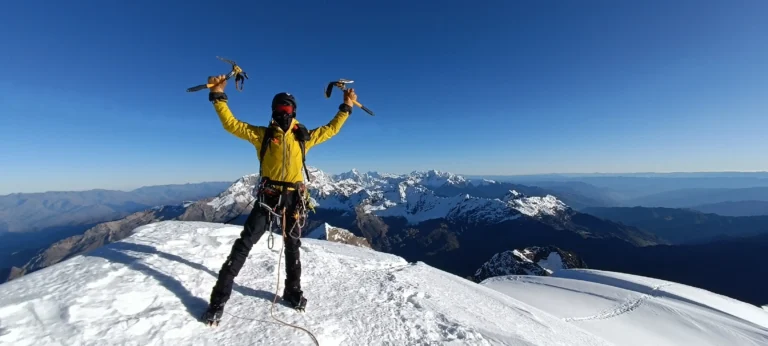
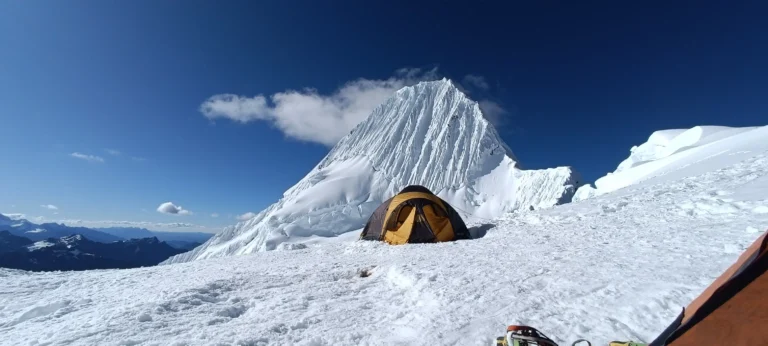
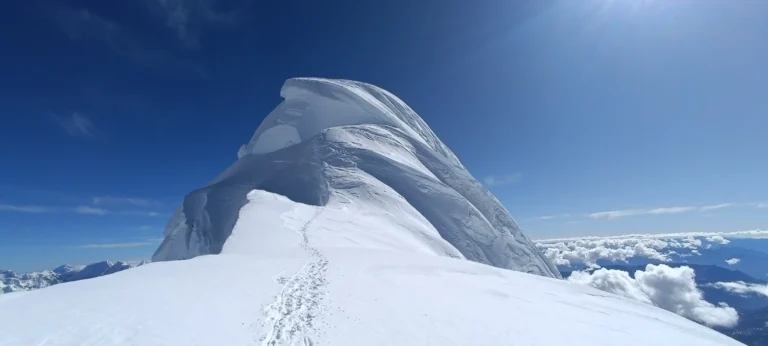
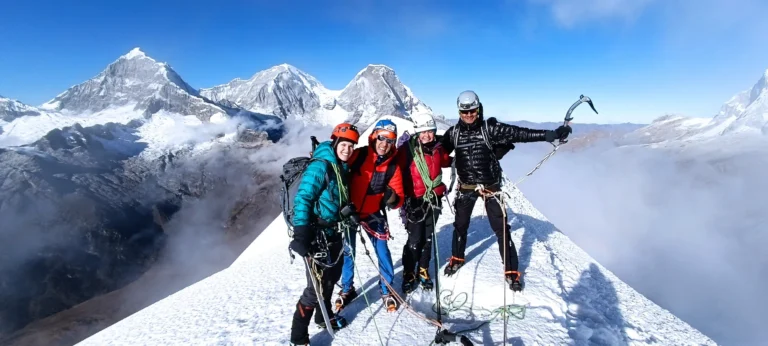
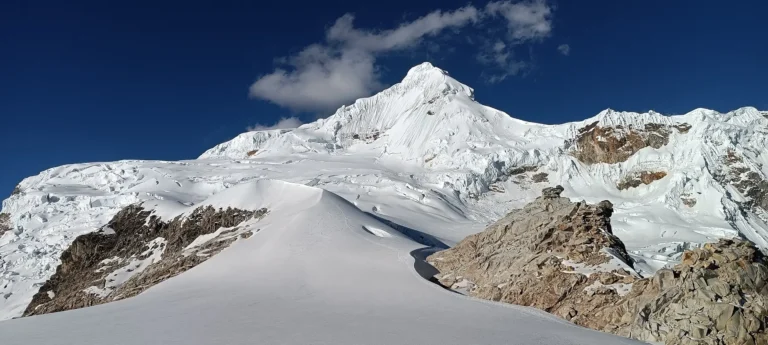
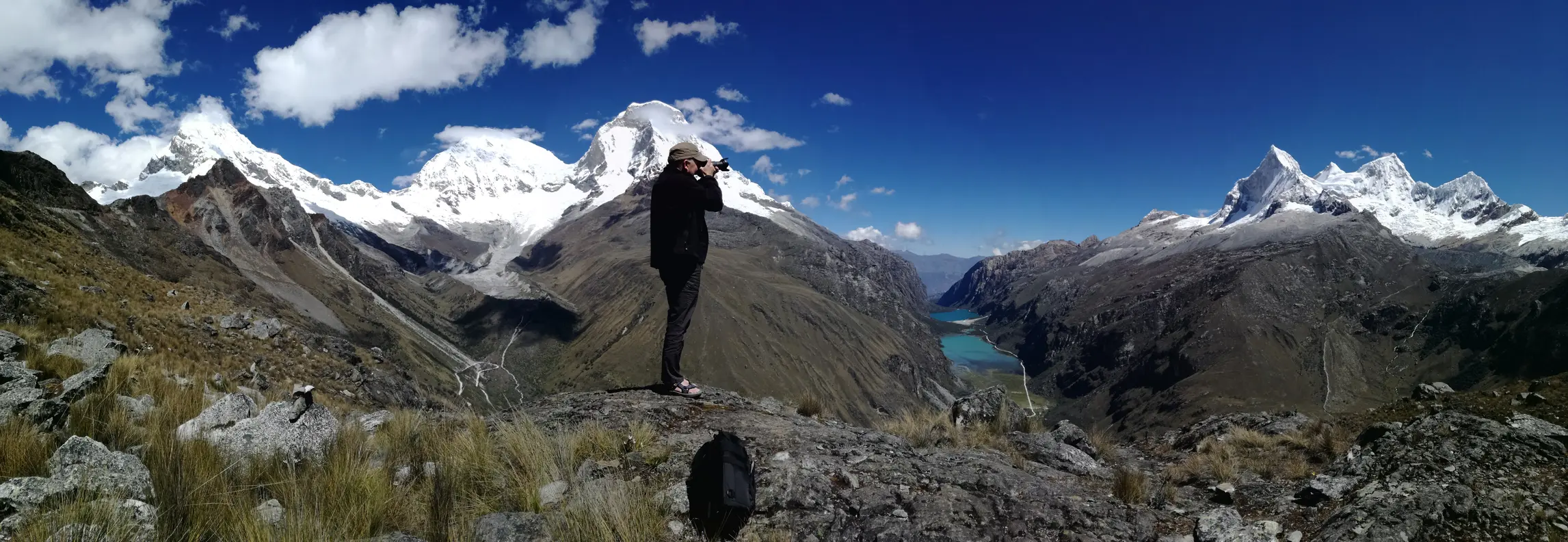
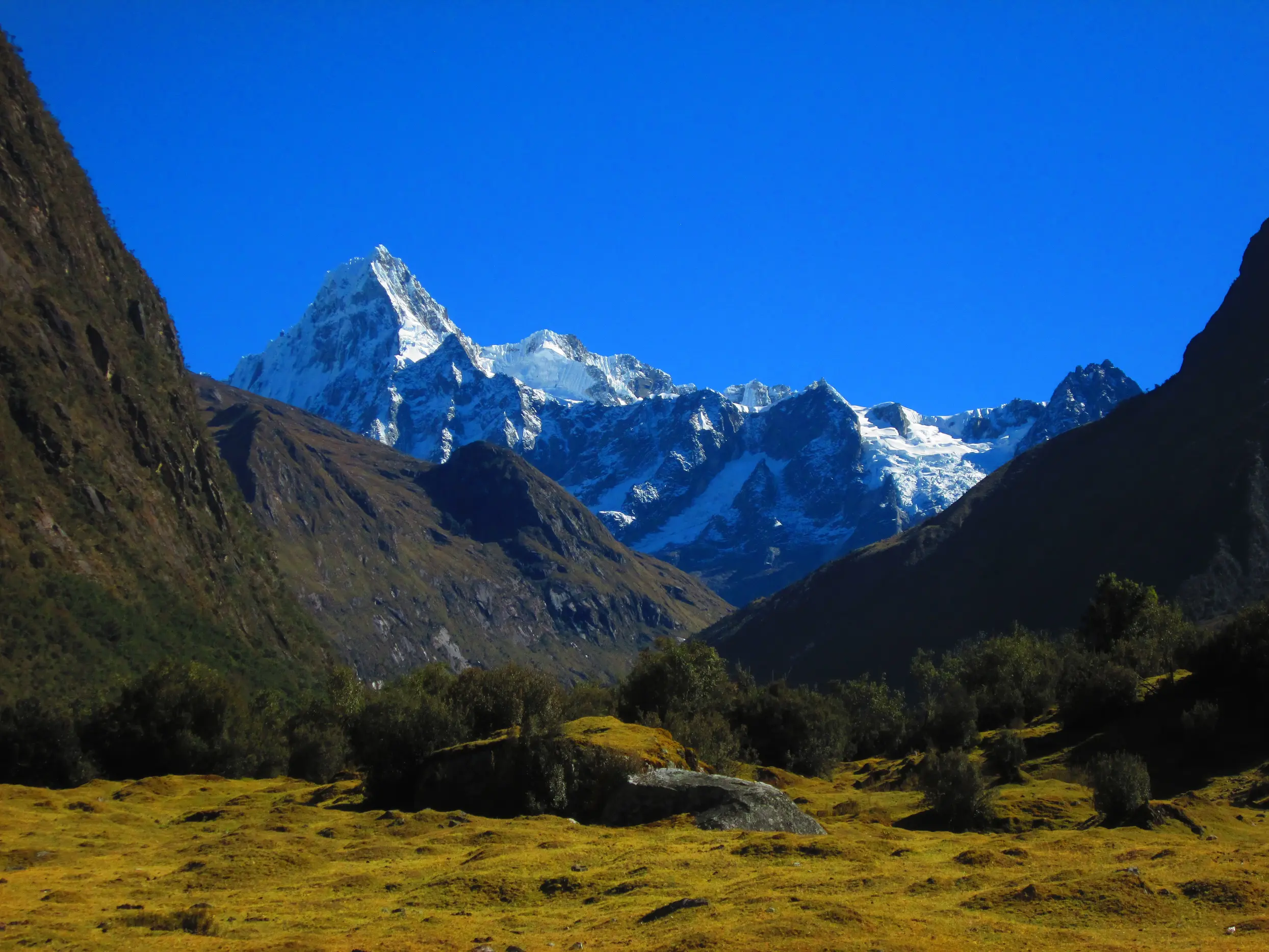
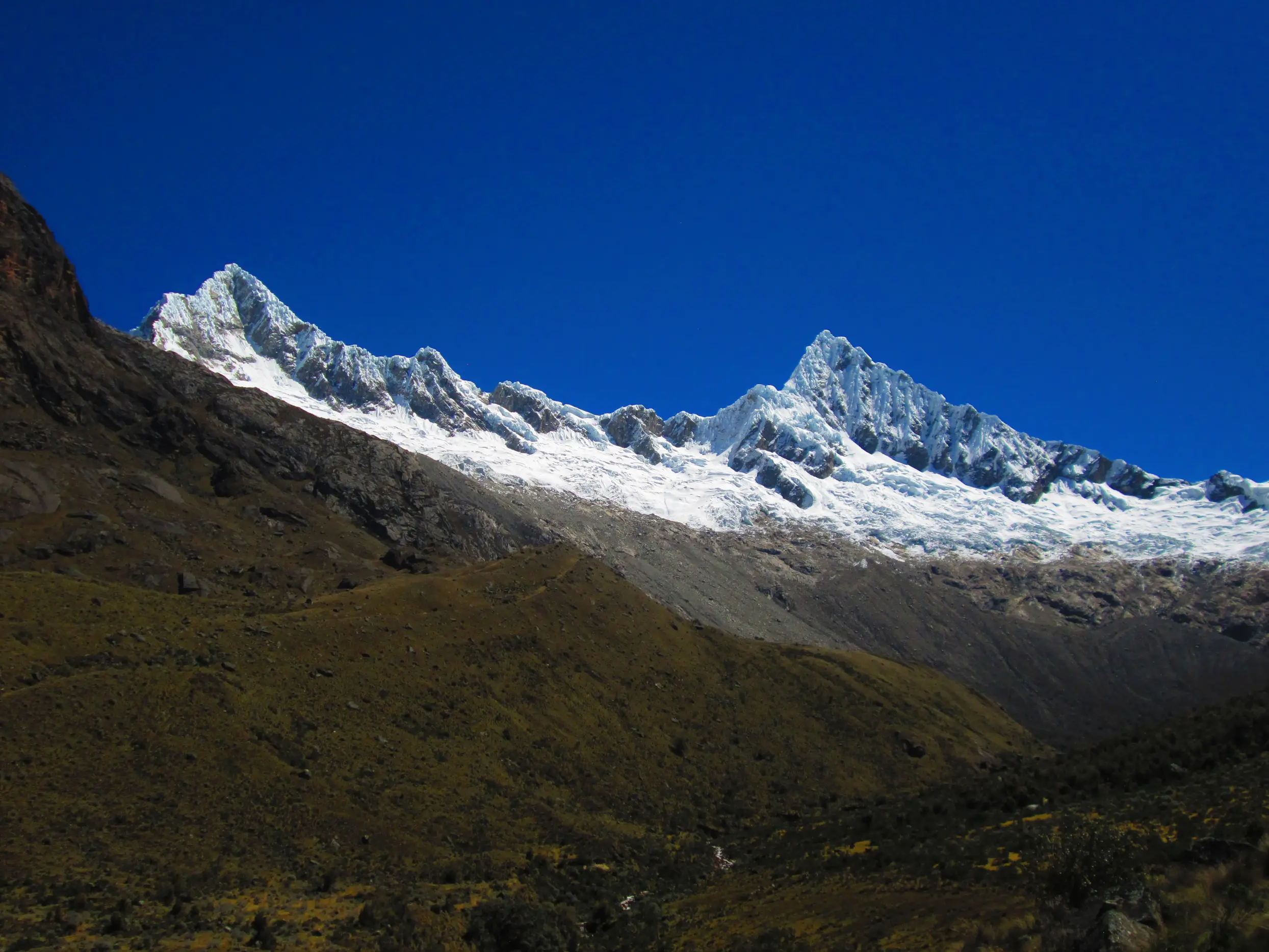
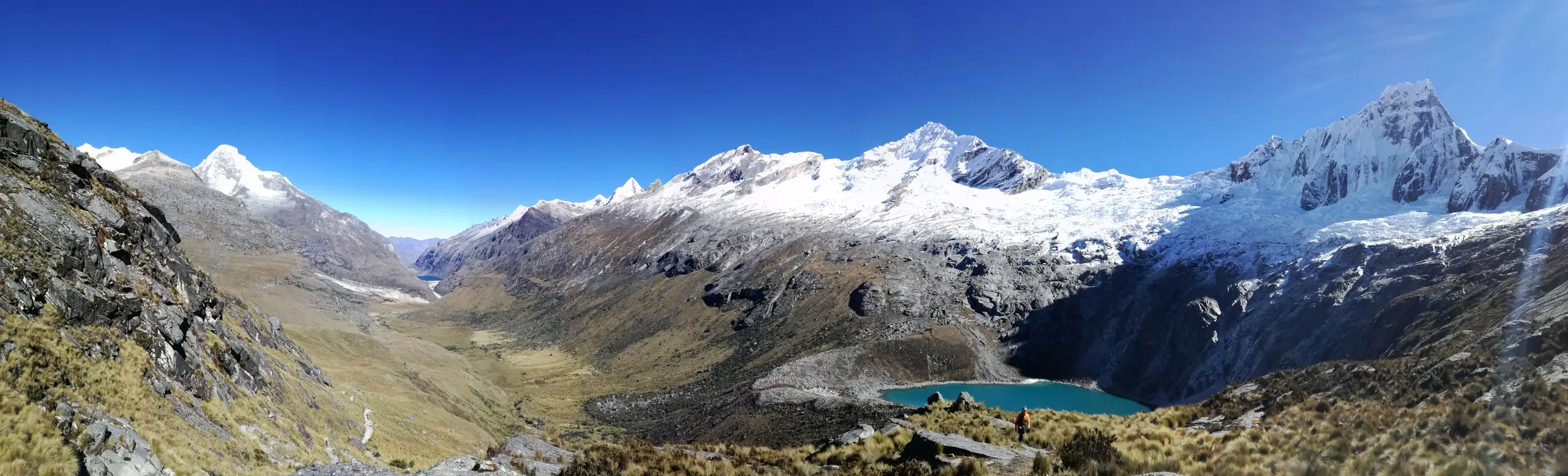
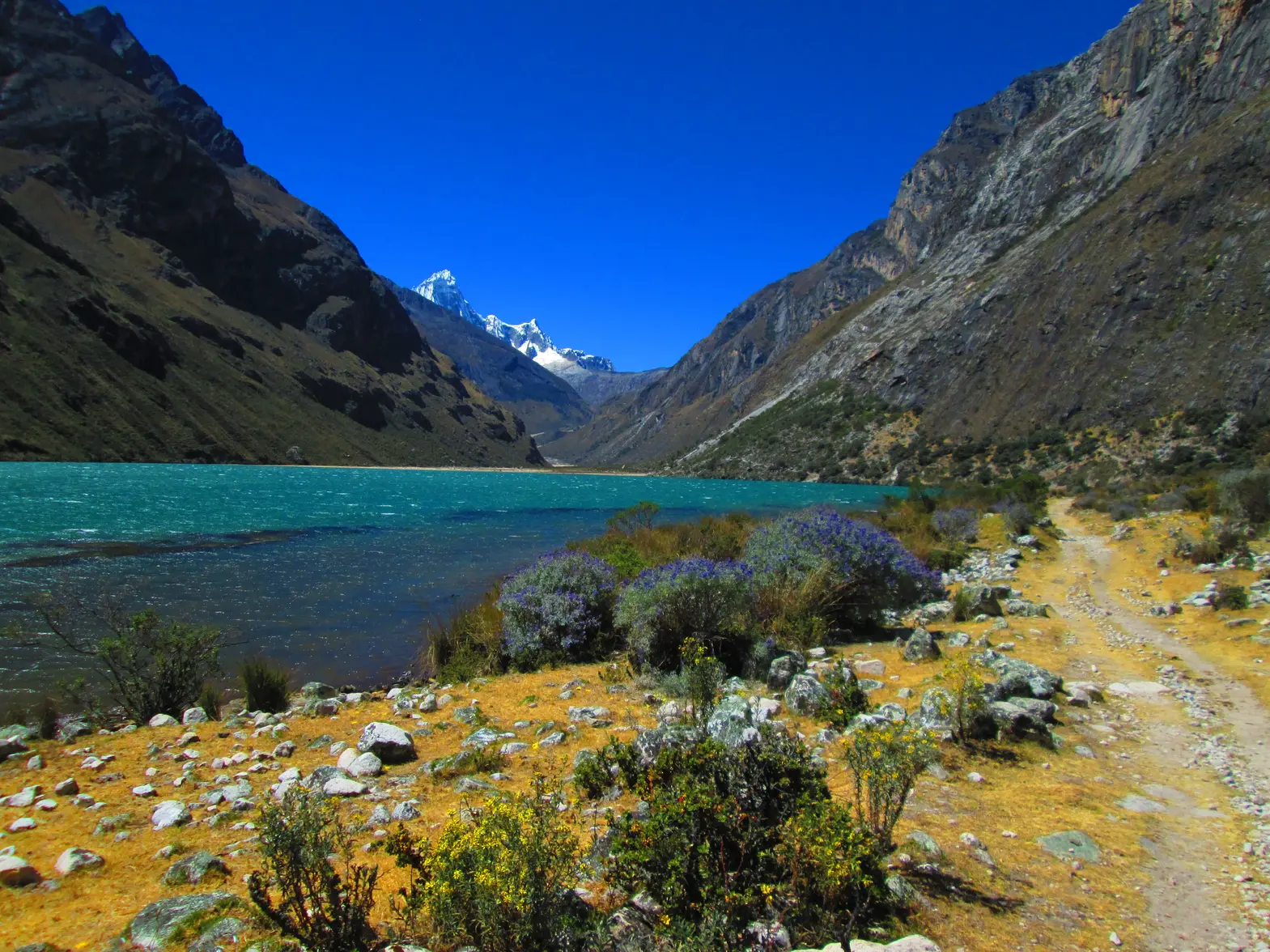
TREKKING SANTA CRUZ: is one of the most iconic and spectacular routes in the Cordillera Blanca. This multi-day, high-altitude journey takes you deep into the heart of Peru’s most breathtaking mountain range. Over nearly a week of remote and rewarding hiking, the trail winds through the lush valleys of Llanganuco, Huaripampa, and Santa Cruz. Along the way, you’ll be immersed in extraordinary alpine scenery—towering, striated peaks rising above 6,000 meters, cascading glaciers, and shimmering turquoise lakes. The route also passes through vibrant alpine meadows and fragile high-altitude ecosystems, offering a constant sense of awe. Each campsite reveals sweeping, unforgettable views, making this trek a truly world-class adventure.
- Day 1: Huaraz (3,050 m / 10,030 ft) – Transfer to Cebollapampa (3,900 m / 12,830 ft) – Trek to Laguna 69 (4,620 m / 15,195 ft) – Trek back to Yuraccoral (3,900 m / 12,830 ft)
- Day 2: Yuraccoral – Transfer with private transportation to Vaquería (3,700 m / 12,170 ft) – Trek to Paria (3,800 m / 12,500 ft)
- Day 3: Paria – Trek to Punta Unión (4,750 m / 15,625 ft) – Trek to Taullipampa (4,250 m / 13,980 ft)
- Day 4: Taullipampa – Trek to Alpamayo Base Camp (4,350 m / 14,310 ft) – Trek to Llamacoral (3,750 m / 12,335 ft)
- Day 5: Llamacoral – Trek to Cashapampa (2,990 m / 9,835 ft) – Transfer with private transportation to Huaraz
Is it for me?
- Ideal for adventure enthusiasts seeking an immersive and rewarding trekking experience.
- Perfect for those eager to embark on a unique journey through one of the Andes’ most spectacular & classic trekking destination.
- Best suited for first time or experienced and adventurous trekkers who can adapt easily to high altitude and long distances, as the route requires good physical condition and proper acclimatization.
Restrictions
- Not recommended for pregnant women.
- Not suitable for individuals with heart conditions.
- Not recommended for those with knee problems, as the trek requires good physical fitness and endurance.
Adicional notes:
Experience Required & Some Important Notes
- Please note: Santa Cruz trek + laguna 69 starts and ends in Huaraz. Please see the travel program for information about how to travel to Huaraz.
- Participants Physical Requirements: Participants must be in good physical condition. Previous hiking experience is required, and prior backpacking experience is highly recommended, though not mandatory.
- Hiking Schedule: We will be hiking for approximately 05 days, averaging on 5 – 8 hours of hiking per day.
- Overnight camps will be at elevations between 3,600 m / 11,845 ft and 4,250 m / 13,980 ft, the highest camp on the trek. therefore, Proper acclimatization and suitable physical preparation are required
- Huaraz is at 3,050m/10,030 ft. Because of this, we highly recommend staying in Huaraz a few days before trekking departure to get a good acclimatization.
- We highly recommend spending at least 1- or 2 days doing day hikes around Huaraz to allow for a gradual acclimatization process to the altitude and to help avoid altitude sickness.
- DON’T let fear of altitude sickness stop you from enjoy your trek. Altitude sickness is an illness caused by exposure to low air pressure, which many people experience at high altitudes. Exerting yourself at high altitudes, especially if you have not been properly acclimated, can cause it, but with proper preparation, & gradual ascend you can be ready for the trek
- Support on the Trail: You will only need to carry a day pack; your main luggage or large rucksack will be carried by donkeys
- During the trek: We provide four meals daily, prepared by our chefs on the trail (breakfast, snacks, cooked lunches, and hot dinners)
Acclimatization Hikes
Proper acclimatization to altitude is essential before undertaking any treks in the Cordillera Blanca, in order to avoid loss of energy or altitude-related illnesses. Trekking above 4,000 meters is physically demanding, and inadequate acclimatization can significantly affect performance and safety. As a responsible adventure company and qualified mountain guides, we strongly recommend a minimum of 1 – 2 days of acclimatization prior to any trek in the Cordillera Blanca.
We recommend arriving in Huaraz at least 2–3 days before your trek departure to allow proper acclimatization to the altitude. It is advisable to spend at least one full day in Huaraz to recover from your journey, followed by day hikes to higher elevations around the area to further aid acclimatization before beginning your trekking program.
We can also arrange acclimatization day hikes for you—just let us know your preferences.
Suggestions for Responsible Trekkers
If you are planning to visit our region, making the most of your experience starts with taking care of your health. The best way to enjoy the Andes safely is by following a proper acclimatization process as soon as you arrive in this high-altitude environment. This helps prevent altitude sickness and ensures a more comfortable and enjoyable journey. From our experience, your safety and well-being are always the top priorities, so you can feel confident and at ease while exploring far from home. We recommend a gradual acclimatization plan such as the following:
Day 1 — Easy hikes
- Laguna Wilcacocha
- Laguna Llaca
- Laguna Parón
- Laguna Rocotuyoc
- Laguna Radian
Day 2–3 — Moderate hikes
- Laguna Churup
- Laguna 69
- Laguna Hualcacocha
Following this step-by-step approach will help your body gradually adapt to the altitude, allowing you to fully enjoy your trekking experience with greater safety and comfort.
Detailed itinerary
Detailed day-by-day route with altitude, distances and campsite information.
Breakfast
Snak
Lunch
Tea time
Dinner
DAY 1: Huaraz 3,050 m / 10,030 ft – Transfer with private transportation to Sebollapampa 3,900 m / 12,830 ft – trek to laguna 69 (4,620 m / 15,195 ft) – trek back to Yuraccoral 3,900 m / 12,830 ft
Our trek expedition start with picking up you from your hotel with our private vehicle at around 5:30 a.m. and begin the drive through the fertile Callejón de Huaylas Valley. Along the way, we will stop in the town of Anta to enjoy spectacular views of the Andes, including the impressive western face of Huascarán (6,768 m / 22,205 ft), the highest mountain in Peru. Then we will continue driving north through the Callejón de Huaylas to the town of Yungay. From there, we head toward the mountains along a dirt road until reaching the entrance of the Llanganuco Valley, where we will stop to register and purchase entrance tickets for the national park. From this point, we drive deeper into the narrow Llanganuco Valley, surrounded by towering granite walls and beautiful quenual forests. This glacial valley is also home to abundant high-Andean vegetation, including ferns and bromeliads. Soon we arrive at the famous Lakes Chinancocha and Orconcocha (3,850 m), where the valley opens into a spectacular landscape with panoramic mountain views. We will stop there to take photographs and enjoy the scenery. Afterward, we continue driving to Cebollapampa, located at the end of the valley.
We will begin our hike from Sebollapampa, following a well-defined trail across gentle terrain for the first hour. As the path gradually ascends, it winds upward in a series of switchbacks, revealing increasingly stunning views of the surrounding landscape. Upon reaching the final ridge, we will be rewarded with the brilliant turquoise waters of Laguna 69, set at an altitude of 4,620 meters (14,924 feet). Here, the dramatic presence of Mount Chacraraju dominates the scene, its towering slopes feeding a cascading waterfall that spills directly into the lake. At the shoreline, we’ll take time to relax, soak in the spectacular alpine scenery, and enjoy a well-deserved lunch surrounded by some of the most breathtaking views in the Cordillera Blanca.
Afterward, we retrace our steps back to Sebollapampa, experiencing the landscape from a fresh perspective. Along the return, we’re treated to sweeping vistas of iconic peaks such as Huascarán, Chopicalqui, and Yanapacha, bringing a memorable close to this unforgettable hike. Snack + lunch while walking.
DAY 2: Yuraccoral - Transfer with private transportation to Vaqueria 3,700 m / 12,170 ft – trek to Paria 3,800 m / 15,665 ft
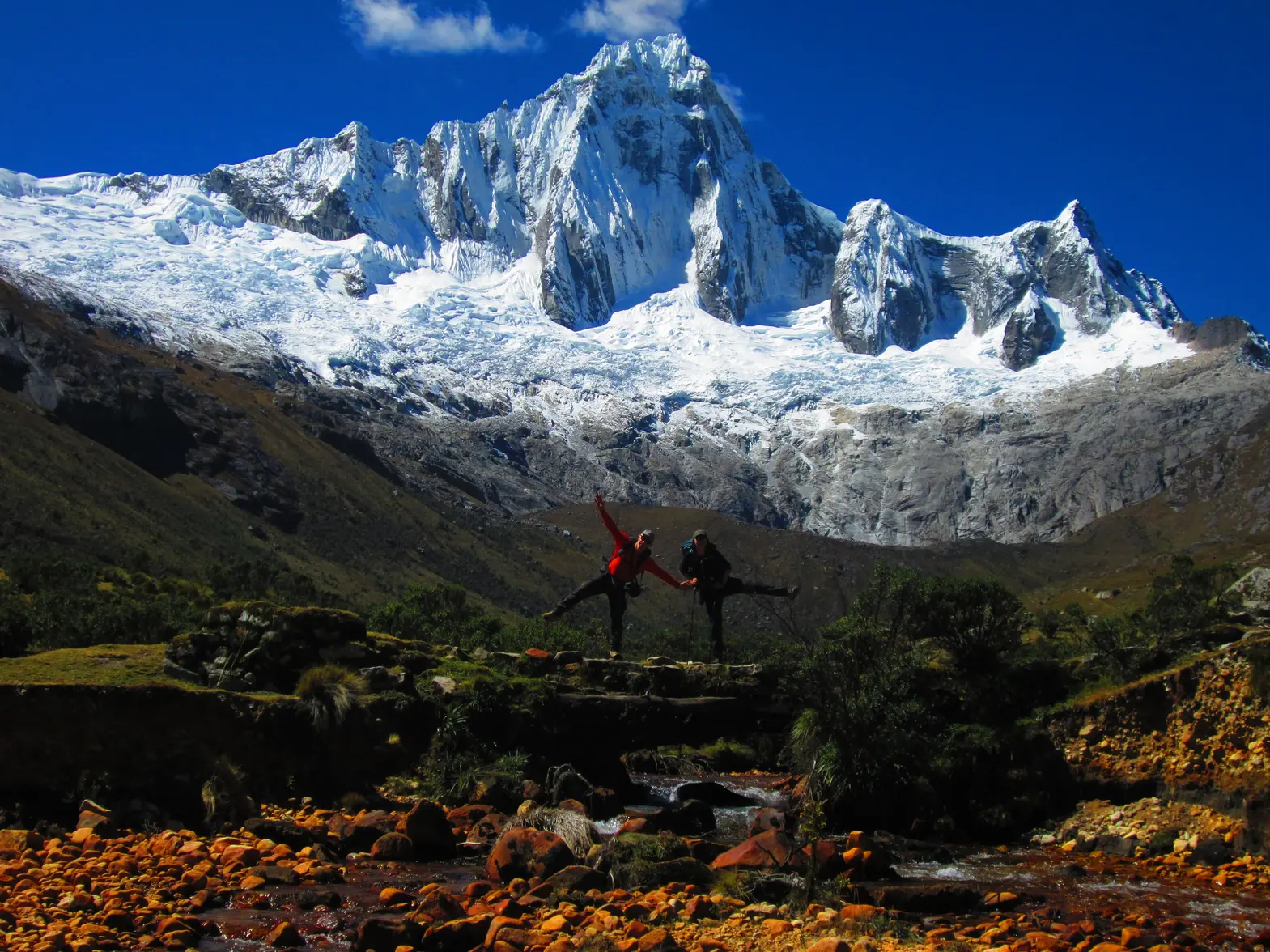
On this day, we tranfer by private vehicle from Yuraccoral to Vaquería, following the road to the end of the valley before it turns west toward a glacial moraine. After navigating more than twenty dramatic hairpin turns, we reach the highest point of the journey at 4,750 meters. At Portachuelo, we pause to take in a truly spectacular panorama—an unforgettable scene of towering peaks and sweeping valleys. The descent, with its many winding bends, is equally impressive as we cross the Cordillera Blanca from west to east. Continuing down into Vaquería village, where we will meet with our donkey driver and pack animals. From here, we begin our trek on foot, heading toward the Paria Valley. The trail leads us gradually uphill through the picturesque Huaripampa village, where we have the chance to interact with welcoming Quechua families and children. If you’ve brought small school supplies—such as pencils, notebooks, or crayons—this is a meaningful place to share them. As we continue, the landscape opens into a wide, lush green meadow framed by the striking backdrop of Mount Taulliraju. The route then passes through beautiful stands of quenual and quisuar trees, adding texture and shade to the journey. By late afternoon, we arrive at the peaceful Paria campsite, surrounded by serene mountain scenery. Snack + lunch while walking
DAY 3: Paria – Trek to Punta Union Pass 4,750 m / 15,625 ft – Trek to Taullipampa 4,250 m / 13,980 ft
On this This is the most exhilarating day of the trek. We begin by passing near the stunning glacial lagoons of Tzaquicocha, their vivid colors reflecting the surrounding peaks. The trail then traverses rocky terrain and inclined slabs, with the magnificent presence of Mount Taulliraju towering to the north throughout the day. As we approach Punta Unión Pass, anticipation builds—and at the summit, where we will be rewarded with one of the most breathtaking panoramas of the entire journey. Towering peaks such as Pukajirca, Taulliraju, Artesonraju, and Quitaraju rise dramatically before us, while far below, the vibrant lakes of Taullicocha and Jatuncocha shimmer in the Santa Cruz Valley. It’s the kind of view where even a hundred photos hardly do it justice. After taking time to rest, capture photos, and fully appreciate the scenery, we begin our descent along sections of stone-paved trail. By late afternoon, we arrive at the Taullipampa campsite. From here, we can admire iconic peaks—including Alpamayo, Taulliraju, Artesonraju, and Quitaraju—right from the comfort of our tents, surrounded by the quiet beauty of the high Andes. Snack + lunch while walking.
DAY 4: Taullipampa – Trek to Alpamayo base camp 4,350 m / 14,310 ft – Trek to Llamacoral 3,750 m / 12,335 ft
On this day, we descend toward Alpamayo Base camp, following a scenic route high above the Arhuaycocha Gorge. Along the way, we’re treated to an exceptional view of Alpamayo’s striking east face. Although not among the tallest peaks in the range, Alpamayo is one of the most frequented by mountaineers. In 1966, an international survey famously named it the most beautiful mountain in the world—a reputation earned by its perfect pyramidal shape on the north face and the elegant ice flutings along its southwest ridge. From this vantage point, we also enjoy a dramatic perspective of Artesonraju, whose sharp, symmetrical summit closely resembles the iconic Paramount Pictures logo. Continuing along the Arhuaycocha ravine, we reach Alpamayo Base Camp, a spectacular setting surrounded by towering peaks. After spending time here, we retrace our steps, descending back toward Quisuar. From there, we rejoin the main trail coming from Taullipampa and continue on to the Llamacorral campsite, where we settle in for the night amid the beauty of the valley. Snack + lunch while walking.
DAY 5: Llamacoral – Trek to Cashapampa 2,990 m / 9,840 ft – Private transfer to Huaraz 3,050 m / 10,030 ft
After our final breakfast on the trek, we begin the descent along the narrow Santa Cruz Valley. The trail leads us past a beautiful waterfall and through rich Andean vegetation, including native Queñual tree forests, bromeliads, ferns, and many other plants that enhance the landscape. After two to three hours of steady walking down, we reach the village of Cashapampa, where the trek comes to an end. Here, our private transportation will be waiting to take us back to Huaraz. in Huaraz, time for a well-earned hot shower and some rest. In the evening, enjoy a good dinner in town as we celebrate the successful completion of an unforgettable trek. Snack + lunch while walking.
The Itinerary above is just and suggested program according to your travel dates provided. We are flexible you are completely free to build your own program, according to your necessity and preferences
Services of the itinerary
What is included in the cost?
- Pre-departure briefing: one of our members will come to the hotel to give you the full trekking information of Santa Cruz trek + laguna 69/ 05 days. At this time will be solved any questions or request about the trek. The meeting will be at the scheduled time strictly, 24 hours before the trip begins.
- Private transportation for Santa Cruz trek + laguna 69(Huaraz – Vaqueria/Cashapampa- Huaraz) / Round Tip
- Pick up & drop off at the hotel according the trip program. We strictly pick-up & drop-off at the hotel, when the hotel is located downtown, in another way will be extra expenses according to the hotel location.
- Bilingual trekking guide certified for Santa Cruz trek + laguna 69. He or she will keep you safe, sound, and comfortable on your climb so that you can enjoy your time worry-free.
- Mountain cook for Santa Cruz trek + laguna 69: a chef specialized in cooking on the trail, will prepare all of the delicious meals along the trek to replenish your energy. You will never go hungry!
- Four Healthy meals per day:hearty breakfasts+ snacks + cooked lunches + tea times + hot dinners (vegetarian dishes or special menus are available at no extra cost).Let us know if you have any particular allergies or restrictions on your reservation form and remind your guide during the briefing. You will enjoy breakfast, lunch, and dinner furthermore to hot drinks and snacks.
- Wake up tea:every morning at the campsite, you will wake up with a cup of tea or coffee our staff will bring a cup of tea or coffee to your tent so you will be warmed from inside out before starting your day.
- Snacks on the trail daily: Our snacks include local fresh fruits, biscuits, chocolate, caramels, and more. At the beginning of each day, you will receive a cloth bag with your snacks. Every morning, we will refill it so you can enjoy them during your walk.
- One cloth snack bag per person:To avoid using plastic bags that contaminate our environment, we will provide you a lovely cloth bag for your snacks.
- Tea time daily: Every afternoon, after arriving at the campsite and before dinner, our cooks will provide a light appetizer. This includes popcorn, biscuits, coffee, hot chocolate, tea, hot water, guacamole, fried roots, and more. After a long day of hiking, you won’t have to wait until dinner to relax, warm up, and enjoy a bite to eat.
- Donkey (mules) + donkey driver available for Santa Cruz trek + laguna 69
- 01 Emergency horse: One emergency horse is included for groups of more than five participants. This animal will be used only in emergency situations, such as evacuating an injured trekker or assisting someone who is unable to continue due to exhaustion.
- Products for hygiene: Each day, a small bucket with warm water, a small towel, and liquid soap will be available near the kitchen or dining tent, so you can wash your hands anytime you wish.
- Group medical kit:Our crew will carry a fully equipped group first-aid kit at all times. All of our climbing guides are trained in first aid, and your guide will always carry a personal first-aid kit to handle basic emergencies such as altitude sickness, traveler’s diarrhea, cuts, and scrapes, as well as supplemental oxygen. If necessary, we will evacuate you from the trek as quickly as possible and ensure that you are taken to a clinic for proper treatment.
- Camping equipment: A cooking tent and a dining tent will be provided. Chairs and tables will be available according to the number of participants.
- Toilet tent: We always take care of the environment at all camping spots where it is allowed to do so.
- 04 nights shared accommodation in a sleeping tent.
- Sleeping tent: High-quality, comfortable, multi-season tents, with spacious two-person accommodation
- One foamy sleeping pad per person
- Thermal rest or inflatable mattress per person
- Full Utensil kitchen for everybody
- Radio communicator and cell phone in places of coverage: Our main priority is always the safety of our clients and our team. We are well prepared, and all of our guides are trained to handle most issues that may arise on the mountain. In the event of an emergency or incident, we can make a cell phone call whenever there is coverage or contact our office in town using radio communication. These measures help ensure that everyone feels safe and well supported at all times.
- We will create a lifetime experience for you.
What doesn't included
- Transfer in lima (lima airport – lima hotel – airport (arrival & departure day)
- Booking Ho(s)tel for accommodation in lima
- Transfer in lima (lima hotel – bus station to Huaraz – lima hotel (arrival & departure day)
- Booking Bus or flight ticket to transfer from (Lima – Huaraz – Lima)
- Transfers in Huaraz (transfer from Huaraz airport or bus station – Huaraz hotel – Huaraz bus station or airport (arrival & departure day)
- Acclimatization hike around Huaraz
- Entrance fee ticket or trekking permits (150 soles per participant) valid for 21 days
- Meal and beverages during the stay in Huaraz (breakfast – lunch & dinner)
- Extra food on our trip
- Personal Trekking equipment for Santa Cruz trek + laguna 69
- Additional tours.
- Sleeping-bag (from -10 to – 15 ºC)
- Travel insurance assistance
- In case of sickness while on the trek, emergency costs for transportation, etc. are not included.
- Phone calls, access to internet cabins & other extra expenses
- Laundry service
- Personal toilets.
- Personal medicines.
- Tips for the staff
What to bring
- Approaching or hiking shoes: A good pair of hiking shoes is the most important piece of gear for your trek expedition. Poorly fitting shoes can lead to lost toenails, painful blisters, and sore feet. Choose footwear that fits well and is already broken in. As a guideline, B0 or B1-rated shoes are advisable. There are many reliable brands on the market, including Millet, Salewa, La Sportiva, The North Face, Simond, Lowa, and others.
- Socks: We recommend bringing two pairs of socks for your approach shoes. Many people also prefer wearing a thin liner sock underneath, as it can help reduce friction, prevent blisters, and improve overall comfort
- Underwear
- Quick-drying base layers: A synthetic base layer is recommended over cotton or wool for better moisture management. Long sleeves are preferable for added protection and warmth.
- Lightweight cotton or synthetic pants: Cotton or synthetic hiking pants are suitable for trekking and provide comfort and flexibility & moving around camp
- Mid-layer: A medium-weight fleece or synthetic insulated jacket for warmth and layering. (such as: PrimaLoft, Polar Tec, or merino wool).
- Down or micro-down jacket: Suitable for cold conditions and high-altitude temperatures providing essential warmth in cold conditions (optional but highly recommended).
- Lightweight waterproof shell jackets (e.g., Gore-Tex): are highly recommended for protection in cooler conditions. Reliable brands include Patagonia, Mammut, Eider, Millet, Marmot, Symond, and others.
- Waterproof over-trousers (e.g., Gore-Tex): pants with side zippers are highly recommended. It’s also worthwhile to have lightweight synthetic climbing pants with a durable finish. Slightly stretchy fabrics like Schoeller are ideal for comfort and mobility. Reliable brands include Patagonia, Mammut, Eider, Millet, Marmot, Symond, and others.
- Sun hat: A wide-brim hat or a baseball cap with a bandanna safety-pinned to it helps protect your face and neck from the sun
- Warm wool or synthetic hat: A lightweight, packable hat made from wool or synthetic materials is essential. It should be easy to fold and store in your backpack when not in use.
- Balaclava or Neck gaiter: A medium-weight wool or synthetic neck gaiter is highly versatile. It provides protection from the cold and wind and can also be used as an ear warmer or face covering when needed.
- Sun glasses: Essential for high-altitude trekking around Huaraz, where UV intensity is strong and glare from snow is significant. Choose any brand you prefer, but ensure they provide high UV protection. Category 3 lenses are recommended for trekking.
- Warmer gloves or mittens: a pair of polar-Tec
- Sleeping bag: For high camps up to around 4,000 m / 13,160 ft, choose a bag rated to about -10 º C to 15°C. For even higher elevations, consider a warmer option.
- Sleeping pad: A foam sleeping pad or an inflatable pad (such as Therma -Rest Pro-Lite or Neo-Air) will improve comfort and insulation for a better night’s sleep at high camp.
- Water bottles: Bring two 1-liter bottles (e.g., Nalgene or camel bag). Avoid hydration bladders, as they can freeze in colder days.
- Water treatment: Chlorine dioxide tablets (e.g., Micropur) are optional but useful.
- Headlamp: Bring a headlamp with extra batteries; LED models are recommended (e.g., Petzl or Black Diamond).
- Sun protection: High-quality sunscreen is essential for use around camp.
- Lip balm: Important for preventing chapped lips in dry, high-altitude conditions.
- Insect repellent: Optional, depending on the area and season.
- Pee bottle: One or two 1-liter wide-mouth bottles (e.g., Nalgene) are optional but convenient for high camps.
- Thermos: Optional, but a 1-liter stainless steel vacuum bottle is helpful for keeping liquids warm.
- Trekking poles: Hiking or trekking poles are very useful, ideally in a compact three-section design. Good poles help reduce impact on your knees and joints. We recommend lightweight, adjustable models, as they are easy to store and versatile. Brands such as Black Diamond and Leki are excellent choices.
- Duffel bag / rucksack: A durable duffel bag (around 60 liters) with a padlock is required. These bags will be carried by burros to the Camping spots, so they must be strong and abrasion-resistant.
- Daypack: A 25–30-liters backpack is needed to carry spare clothing, snacks, a camera, and water during day hikes or climbing days.
- Personal first aid kit: We recommend carrying a small, well-prepared personal first aid kit including sterile dressings, antiseptic cream, gauze, bandages, rehydration sachets, zinc oxide tape, and anti-inflammatory pain relievers such as ibuprofen or aspirin. It is also advisable to bring paracetamol and acetazolamide (Diamox) for the prevention and treatment of mild acute mountain sickness (AMS) symptoms. For digestive issues, include loperamide for diarrhea, and antibiotics such as ciprofloxacin or Bactrim for bacterial stomach infections (only if prescribed by your doctor). Additionally, we suggest carrying a small roll of adhesive tape and cough drops for basic relief during the trek.
- Personal Toiletries: Bring basic toiletries such as a toothbrush, a small tube of toothpaste, dental floss, and contact lens solution (if needed). Include a small bar of soap and a compact hand towel or washcloth. On most expeditions, warm washing water can be provided at Base Camp in the morning and afternoon. A small synthetic hand towel or washcloth is useful for sponge baths. Also bring toilet paper for personal use.
Extra service available upon Request
- Bus or flight ticket booking to travel (Lima – Huaraz – Lima)
- Hotel accommodation booking in Huaraz
- Additional tours, hikes for acclimatization, and extension program with climbing expeditions
Prices & Booking
Season:
BEgin of April – End of OctoberWe organize this version of trekking at Santa Cruz trek + laguna 69 / 05 dayson a private basis for individual travelers, groups of friends, families, adventure companies & tour leaders. With fully local guides assistance. Please feel completely free to get in touch with us to discuss the itinerary and your preferred dates to send you a quote, with no obligation.
Cost on private service with version of camping support:
Loooking for a personalized experience?
We can tailor the itinerary and services to your specific needs. Contact us for a custom quote and dedicated logistics planning.
Add-Ons & Extras Not Included in the Budget
Enhance your climbing expedition with the following optional services and upgrades. These can be arranged and added to your program upon request.
Booking & payment policy:
To confirm your reservation about your Huayhuash trek, a deposit of 25% of the total program price is required at the time of booking. The remaining balance must be paid in cash upon arrival in Huaraz, no later than 48 hours before the expedition begins. We offer a flexible cancellation policy. If your plans change, please contact us as early as possible so we can discuss available options and rescheduling possibilities.
Payment Methods:
Cash in Huaraz
RecomendedNot additional fees.
Bank transfer
Accepted, a USD $60 bank fee applies.
Credit/Debit card
Accepted; a 6% processing fee applies.
Western union
Transactions incur a commission of 3% to 5%.
A 5% discount is offered for reservations made 5 months in advance of the expedition start date. The discount is applied to the total program price.
Students & groups of 6+ — Eligible for special group discounts.
Private service:
We offer 100% guaranteed private multi-day treks for any group size. Enjoy a comfortable, highly personalized experience with flexible itineraries tailored for your safety, acclimatization, and overall enjoyment. All departures are 100% guaranteed, once the reservation has been confirmed
The Premium Difference:
From the very beginning, ANDES ADVENTURE HOLOIDAYS E.I.R.L, has focused on delivering premium, personalized trekking experiences — rather than low-cost, high-volume tours.
Professional Operations
Careful logistics and responsible operations designed for high standards of service and uncompromised safety.
Premium Gear & Transport
Top-quality camping and safety equipment, along with reliable modern private transportation.
Small Group Sizes
Maximum 8 participants to guarantee a personalized, comfortable, and highly attentive experience.
Expert Local Staff
Highly experienced bilingual mountain guides, mountain cooks, and dedicated local staff.
Our pricing reflects the true cost of operating professionally and responsibly, ensuring a high standard of service, safety, comfort, and authentic life time experiences.
Adicional notes:
Acclimatization Hikes
Proper acclimatization to altitude is essential before undertaking any treks in the Cordillera Blanca, in order to avoid loss of energy or altitude-related illnesses. Trekking above 4,000 m / 13,160 ft is physically demanding, and inadequate acclimatization can significantly affect performance and safety. As a responsible adventure company and qualified mountain guides, we strongly recommend a minimum of 2–3 days of acclimatization prior to any trek in the Cordillera Blanca.
We recommend arriving in Huaraz at least 1–2 days before your trek departure to allow proper acclimatization to the altitude. It is advisable to spend at least one full day in Huaraz to recover from your journey, followed by day hikes to higher elevations around the area to further aid acclimatization before beginning your trekking program.
Booking Considerations
- The Peruvian general sales tax (I.G.V) 18% is not included in the rate shown
- The cost shown does not include the cost of the pre-payment transaction for early booking.
- How to book this trek program: you can make a reservation by sending us an email or using the reservation form provided on our website or via WhatsApp.
- Booking Confirmation: To confirm your booking with us, you must make a deposit of 25% of the total price. The remaining balance must be paid in cash upon arrival in Huaraz, strictly 48 hours before the tour begins
- Once you have made the deposit, please send the payment voucher via email or WhatsApp. If you booked online, kindly message us on WhatsApp so we can stay in contact, coordinate your briefing, and provide useful recommendations for your trek program.
- Fast and Easy Communication: All emails are answered as soon as possible to ensure fast and easy communication.
- Communication Options: We offer several ways to stay in touch with us. You can contact us through online chat, WhatsApp, Instagram, or via the email on our website. Simply fill out the reservation form or send us an email to ensure easy and personalized communication with our team.
- For more information, please contact us via WhatsApp at +51 931 888 334 or by email at in@andesadventureholidays.com
Guiding Ratio
Guiding Ratio on Trekking
For moderate – difficult treks, such as Santa Cruz trek + laguna 69 the guiding ratio is 6:1, meaning a maximum of 6 clients per guide. For larger groups of more than clients, additional guides will be provided as needed. We believe that maintaining a low client-to-guide ratio enhances safety and ensures a better trekking experience.
Trek Grading & Preparation
Santa Cruz trek + laguna 69 = 4,750 m / 15,625 ft Punta Union pass
Grade = medium – hard grade trek, not beginner suitable because it is physically demanding
Trip Grading & Physical Preparation
We grade this trek as moderate to difficult. While the daily hikes are not extremely technical, this adventure involves gaining 450–700 m of elevation per day and descending significant heights. Walking at high altitude makes the trek more challenging than at lower elevations. You need to be in good physical condition to keep walking uphill for 3–4 hours until reaching higher altitudes, and to manage long descents safely. Good health and fitness are essential for enjoying the trek. We strongly recommend preparing your body before the trip. Regular exercise such as running, cycling, gym workouts, or jogging for at least 30 minutes, three times a week, during the three months prior to your departure, is highly beneficial. Additionally, hill walking with a 10–15 kg backpack in variable weather conditions will help strengthen your legs and improve fitness.
Remember: the fitter you are, the more you will enjoy the trek.
Trekking Routes
We usually describe in our website, or in other any information in PDF Normal routes
Santa Cruz trek + laguna 69: easy – moderate difficult suitable for first time & experienced trekkers.
The description of the route that we are providing is referential of the last season used; Therefore, description of routes that you can find in some guidebooks, can be out dated within a year or more.
Guide Qualifications
The guide, who will take you, will be bilingual professional, expert guide with wide experience in trekking.
Luggage & Pack Weight
Advice for Trekking / Santa Cruz trek + laguna 69
Please note that during the trek program, donkeys + donkey drivers service will be available to carry all personal and group luggage. You will only need to carry your personal day pack while walking.
Luggage allowance: The total weight of trek equipment and your personal luggage should not exceed 10–12 kg per participant. Keep in mind that a lighter backpack or day pack will make your trek much more enjoyable.
Trekking & Travel Times
Trekking hours
Trekking hours are estimated and based on the average pace of our groups from past experience. Some participants may walk faster, while others may go slower.
Approximate Trek Routes:
Access roads to and from the trek are generally unpaved dirt roads and can be bumpy in some areas. As a result, travel times may be longer than expected.
Typical Day Routine
A typical day trekking routine
If you have trekked in the mountains before, the routine will feel familiar. Our typical day begins around 6:30 am with a cup of tea (wake-up tea). After that, we provide warm water for washing your hands or face outside your tent.
Before breakfast, it’s time to prepare for the day ahead, including packing your day pack and organizing your duffel bag for the donkeys.
Breakfast is usually served in the dining tent. While you enjoy your meal, the camp is broken down and all gear is packed for the donkeys to carry to the next campsite. After breakfast, each client should fill their water bottle with cooled, boiled water to carry and drink during the day’s trek.
Best Time
- Begin of May – begin of September: Considered the best time, suitable for taking scenic pictures of landscape with blue sky. Besides are ideal months for adventure lovers, who want to practice, mountaineering & other outdoor pursuits.
- October – November (intermediate season): months in which sometimes after 2:00 pm you can have rain in the afternoon.
- December – March (rainy season): mixed weather, sunny & cloudy, which means sometimes sunny during the day and rain in the afternoon. Take your precautions (wear rain clothes & poncho).
Weather
The weather in the mountains is highly variable. Even during the dry season (May–September), rain can occur due to the effects of global warming and climate change. Daytime temperatures can range from warm to very cold, and above 4,000 m, conditions may include rain, strong winds, or snow. For detailed forecasts, you can check: Mountain-Forecast: https://www.mountain-forecast.com/