Expedition overview
02 days
5,686 M /18,705 ft
PD
beginning of April – mid-October
Private service only
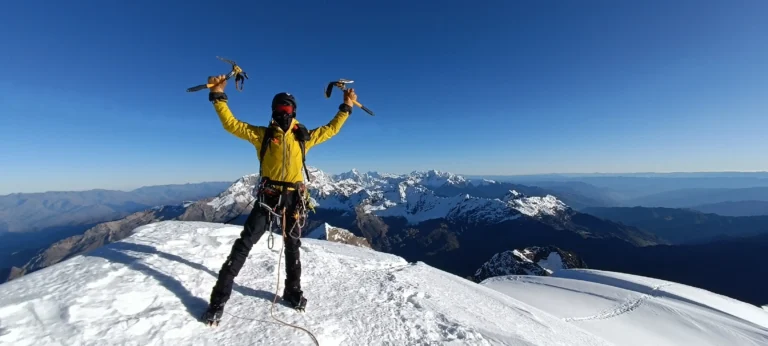
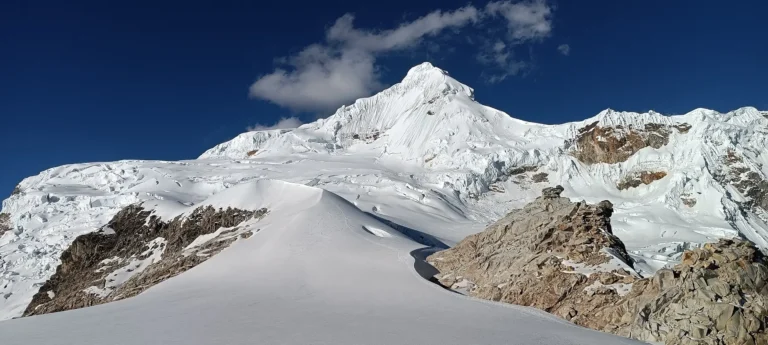
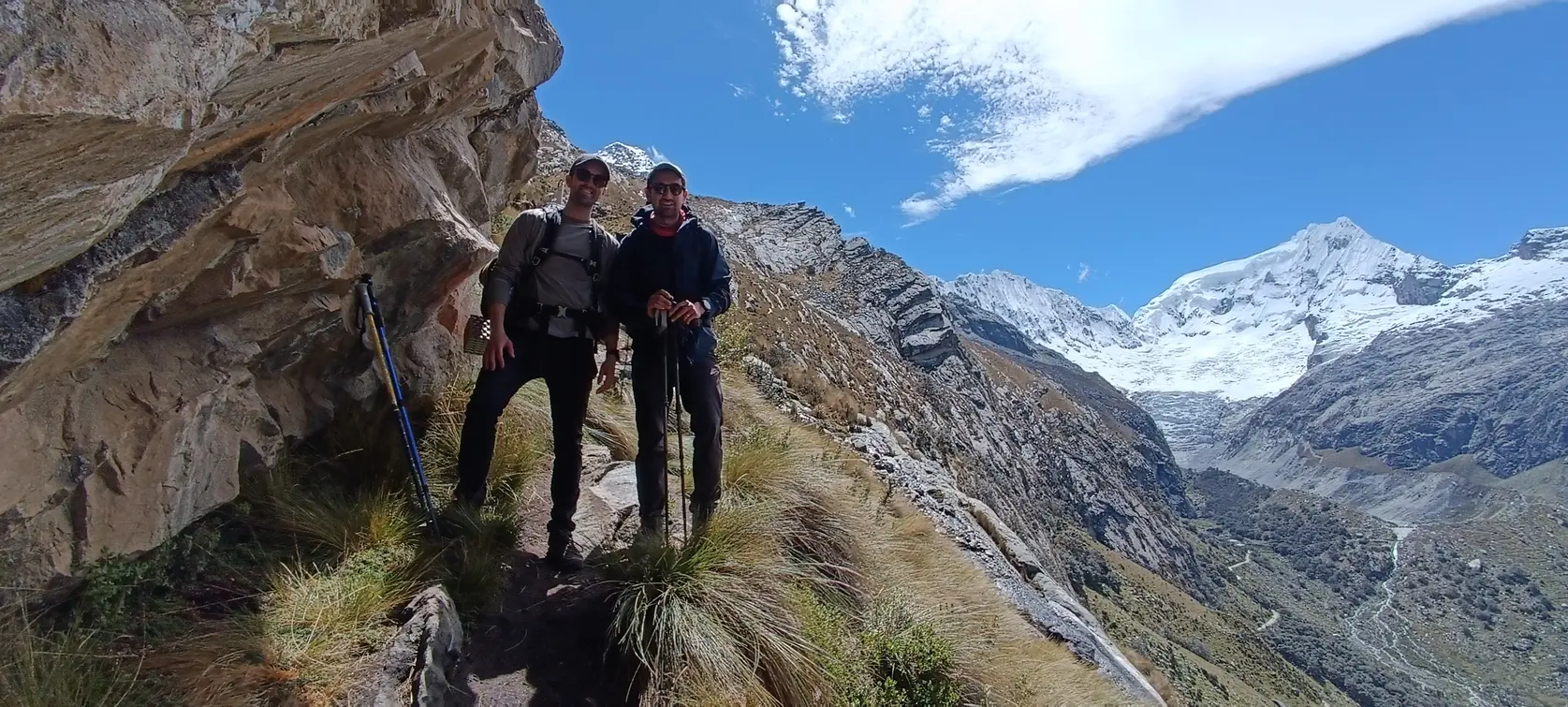
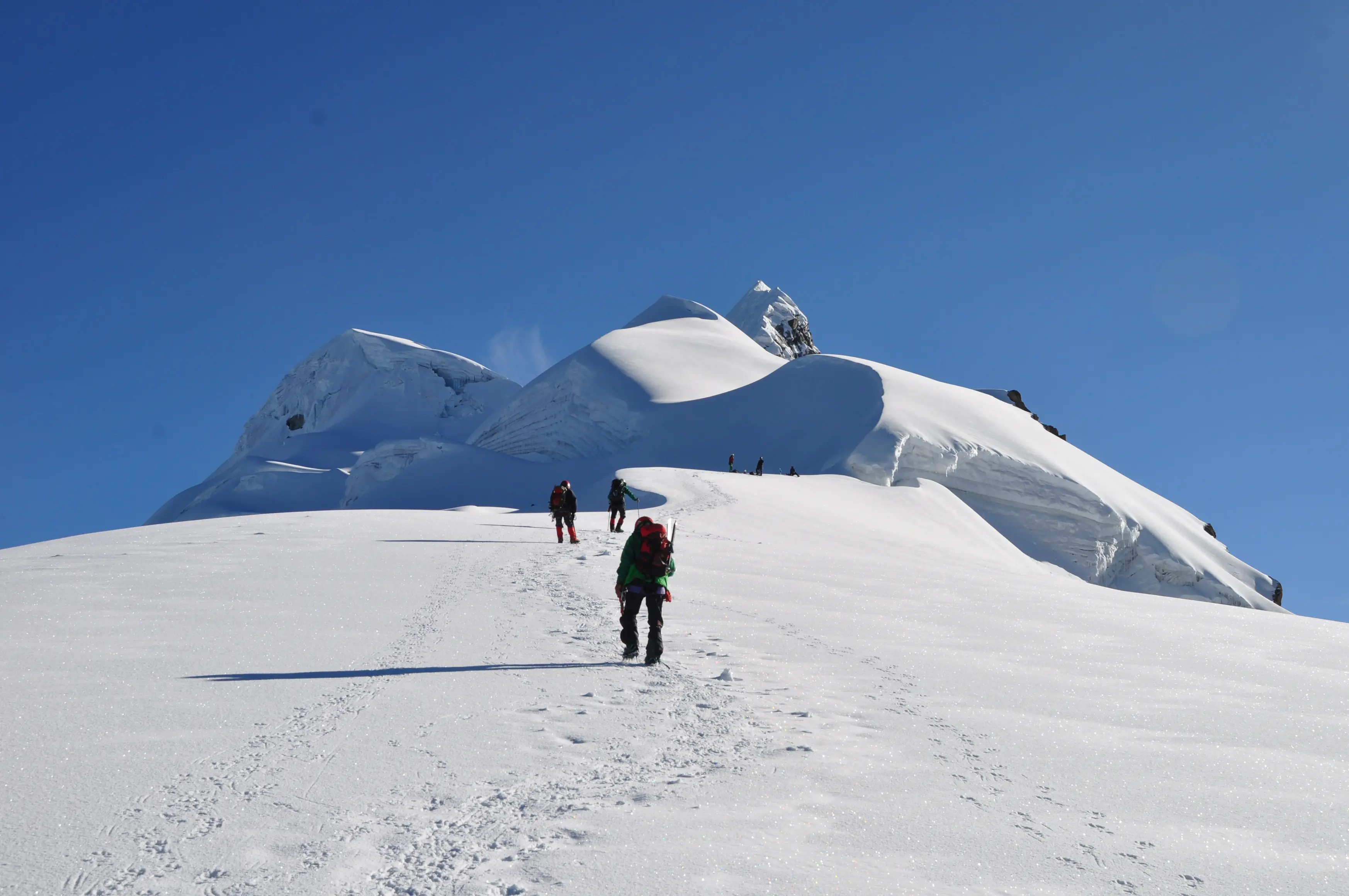
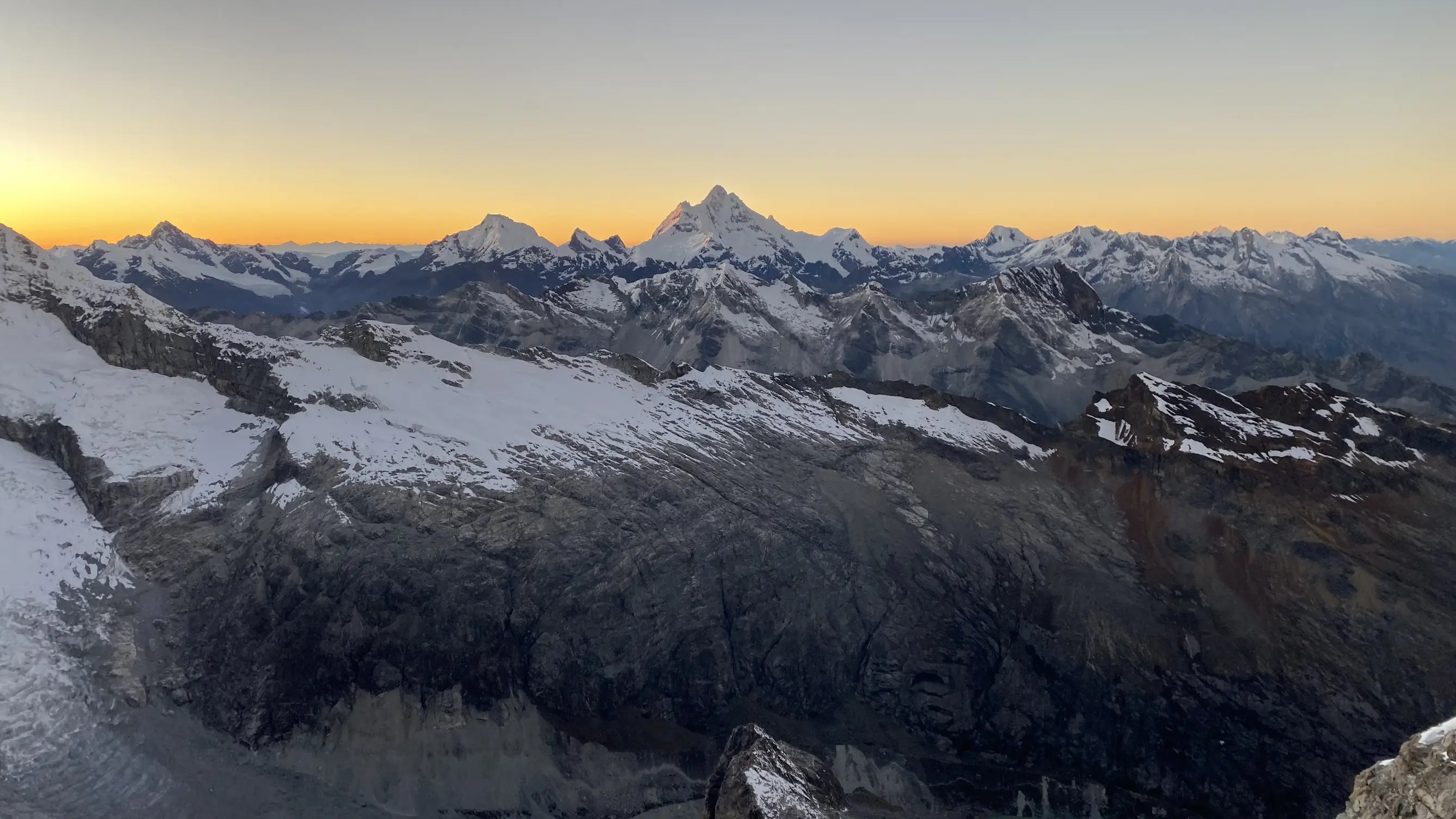
MOUNT VALLUNARAJU,with (5,686 m / 18,700 ft) is one of the few peaks in the Cordillera Blanca that can be climbed in just two days. The ascent offers an enjoyable, moderate mountaineering experience with spectacular panoramic views throughout the route. Vallunaraju is an ideal objective for:- First-time climbers seeking their first high-altitude mountaineering experience- Experienced climbers looking for a rewarding ascent and effective acclimatization- Mountaineering courses at the basic, intermediate, and advanced levels
- Day 1: Huaraz – Transfer with private transportation to Llaca Valley (4,400 m / 14,475 ft) – Trek to Morena Camp (4,930 m / 16,220 ft)
- Day 2: Morena Camp – Summit attempt of Vallunaraju (5,686 m / 18,705 ft) – Return to Morena Camp – Trek to Llaca Valley – Transfer with private transportation to Huaraz
Optional
If you wish, we can arrange & include in the program budget, hotel accommodations in Lima and Huaraz (please let us know your preferred hotel), as well as transportation to travel between Lima – Huaraz – Lima either by bus with Cruz del Sur or by flight with LATAM Airlines. Just let us know your preferences.
Is it for me?
- Ideal for basic, intermediate & advanced-level climbers.
- This beautiful peak is perfect for adventure enthusiasts seeking an unforgettable mountain experience and an exciting high-altitude journey.
- Best suited for experienced and adventurous climbers who can adapt to higher altitudes and longer expeditions, as it requires excellent physical condition and proper acclimatization.
Restrictions
- Not recommended for pregnant women.
- Not recommended for climbers with heart conditions.
- Not suitable for climbers with knee problems, as the climb requires good physical fitness and endurance.
Adicional notes:
Experience Required & Some Important Notes
- Please note: The Climbing Vallunaraju starts and ends in Huaraz. Please refer to the travel program for detailed information on how to travel to Huaraz.
- This program: Is suitable for first-time climbers
- Physical conditions:A good level of physical fitness, strong mental stamina, and the ability to perform intense physical activity for several consecutive days are required.
- Participants Requirements: Participants must be prepared for approximately six hours of physical exertion per day and be able to carry a 15 kg (33 lb.) backpack
- Previous basic mountaineering experience is required, and prior backpacking experience is highly recommended
- Altitude:High-altitude climbing affects everyone differently, and reduced performance is common. To support proper acclimatization, climbing days are generally kept short, and rest days are prioritized. Our gradual acclimatization program helps climbers progressively regain strength and improve performance.
- Basic mountaineering skills are required for this program.
- These summits are suitable for basic, intermediate and advanced-level climbers.
- Trek & Climb Schedule: We will be active in the mountains for approximately 02 days, with an average of 4–5 hours of hiking per day. On summit days, however, the ascent and descent activities may take approximately 10–17 hours.
- Overnight camps will be at elevations between 4,000 m / 13,160 ft and 5,300 m / 17,435 ft, the highest camp on the expedition. therefore, Proper acclimatization and suitable physical preparation are required
- Huaraz is at 3,050m/10,030 ft. Because of this, we highly recommend staying in Huaraz a few days before trekking departure to get a good acclimatization.
- We highly recommend spending at least 2- or 3-days doing day hikes around Huaraz to allow for a gradual acclimatization process to the altitude and to help avoid altitude sickness.
- DON’T let fear of altitude sickness stop you from enjoy your climbing expedition. Altitude sickness is an illness caused by exposure to low air pressure, which many people experience at high altitudes. Exerting yourself at high altitudes, especially if you have not been properly acclimated, can cause it, but with proper preparation, & gradual ascend you can be ready for the climbing expedition.
- Guiding Ratio: In Peru, we climb with a 3:1 climber-to-guide ratio to ensure the individual attention needed during training and throughout the climbs.
- During the climbing expeditions: we will provide 4 meals per day (breakfast, snack, lunch, and dinner), freshly prepared by our chefs during the approach trek to the base camps. On climbing days between Base Camp, Moraine Camp, and the high camps, 3 meals per day (breakfast, snack, and dinner) will be provided and prepared by our chefs.
Acclimatization Hikes
Proper acclimatization to altitude is essential before undertaking any Climbing expeditions in the Cordillera Blanca or Cordillera Huayhuash, in order to avoid loss of energy or altitude-related illnesses. Climbing above 5,000 meters is physically demanding, even when the terrain is not steep or highly technical. For any peak-climbing expedition in the Cordillera Blanca, we strongly recommend a minimum of 2–3 days of acclimatization before the ascent.
Acclimatization for Climbing
All climbing Expeditions programs in the Cordillera Blanca are physically demanding, as you will spend most of the time at elevations between 4,000 and 5,000 meters, with rapid altitude gain shortly after departing from Huaraz. Proper acclimatization is essential to reduce the risk of altitude-related illness.Our expeditions are carefully designed with a gradual acclimatization program to help your body adjust safely to the altitude. We recommend following the itinerary as planned. If you have extra time, arriving earlier is highly advisable so you can spend at least one full day resting and recovering from your journey before the expedition begins
We can also organize acclimatization day hikes for you—just let us know in advance.
Suggestions for Responsible Trekkers
If you are planning to visit our region, making the most of your experience starts with taking care of your health. The best way to enjoy the Andes safely is by following a proper acclimatization process as soon as you arrive in this high-altitude environment. This helps prevent altitude sickness and ensures a more comfortable and enjoyable journey. From our experience, your safety and well-being are always the top priorities, so you can feel confident and at ease while exploring far from home. We recommend a gradual acclimatization plan such as the following:
Day 1 — Easy hikes
- Laguna Wilcacocha
- Laguna Llaca
- Laguna Parón
- Laguna Rocotuyoc
- Laguna Radian
Day 2–3 — Moderate hikes
- Laguna Churup
- Laguna 69
- Laguna Hualcacocha
Following this step-by-step approach will help your body gradually adapt to the altitude, allowing you to fully enjoy your trekking experience with greater safety and comfort.
Detailed itinerary
Detailed day-by-day route with altitude, distances and campsite information.
Breakfast
Snak
Lunch
Tea time
Dinner
Huaraz - Transfer with Private Transportation to Llaca Valley 4,400 m / 14,475 ft – Trekking to Morena Camp at 4,930 m / 16,220 ft
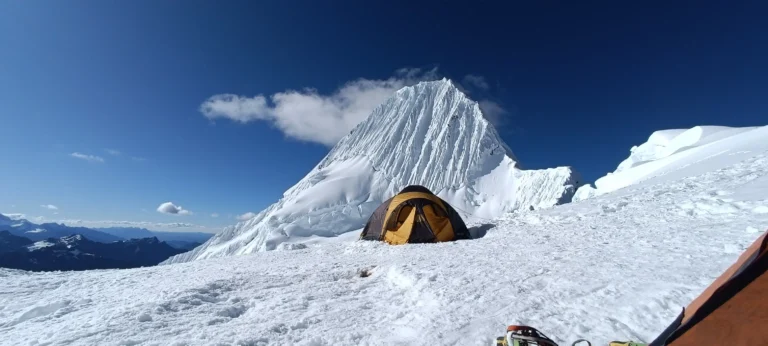
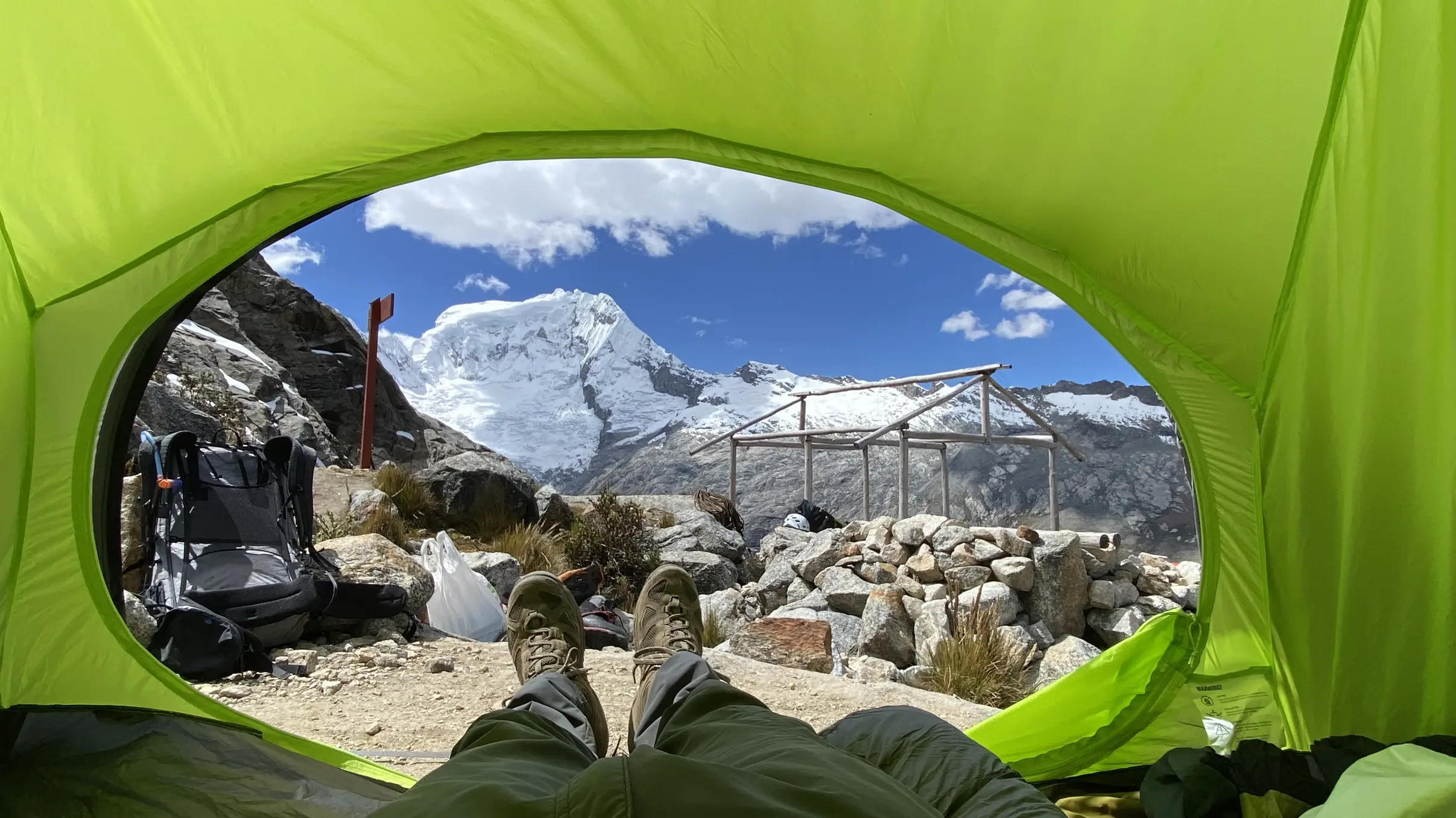
We will pick up you at your hotel with our private vehicle around 7:30 am. then we will drive from Huaraz to the east with our private transportation toward Llaca Valley. After 1:5 hours of driving, we will arrive at the mountain refuge belonging to the high mountain guides school at Llaca valley. Where is located the base camp, from there we will start walking up following the route that goes to the moraine on steeply grassy terrain, after one hour the rote becomes moderate grade with occasionally steep sections, however, the view is fantastic along the path. Once we arrived at the camping spot we will put on our tents, and later we will enjoy the superb vista around us.
Note: Please, understand for this day donkey support is not available. Therefore, each participant must carry their own personal equipment from Base Camp to Moraine Camp. You will need to carry your daypack with your personal gear, including: climbing equipment, clothing, sleeping bag and sleeping pad (foam mattress or thermal mat), extra warm layers, waterproof jacket and pants, water bottle, camera, hiking poles, technical climbing gear should include: a pair of technical ice axes, harness, crampons, mountaineering boots, carabiners, ATC belay device, helmet, Prusik cords, and slings. Our porters will carry the group climbing equipment, including tents, food, cooking gear, and ropes, but each climber is responsible for carrying their own personal and technical equipment.
Morena Camp – Attempt Vallunaraju summit at 5,686 m / 18,705 ft – Moraine camp – Trekking to Llaca Valley – Transfer with private transportation to Huaraz
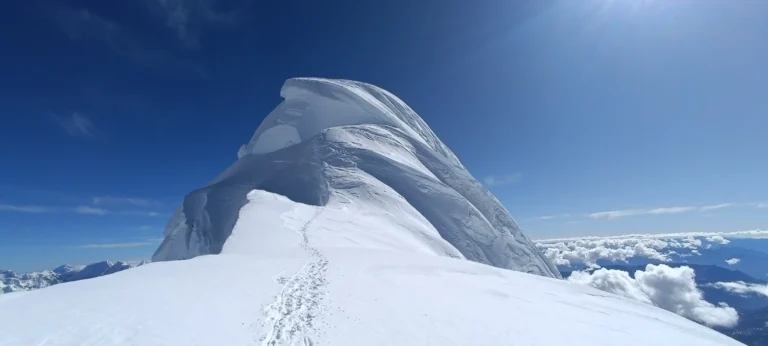
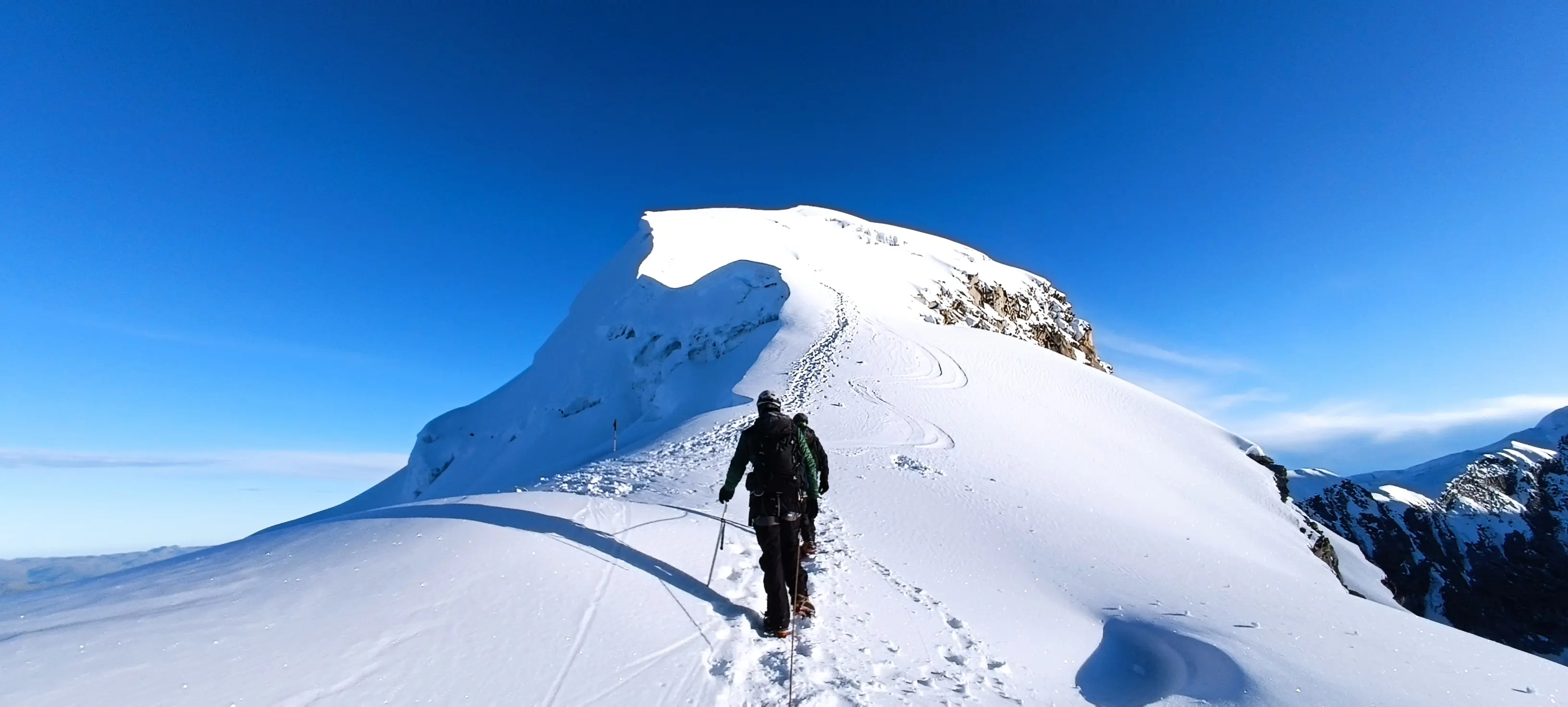
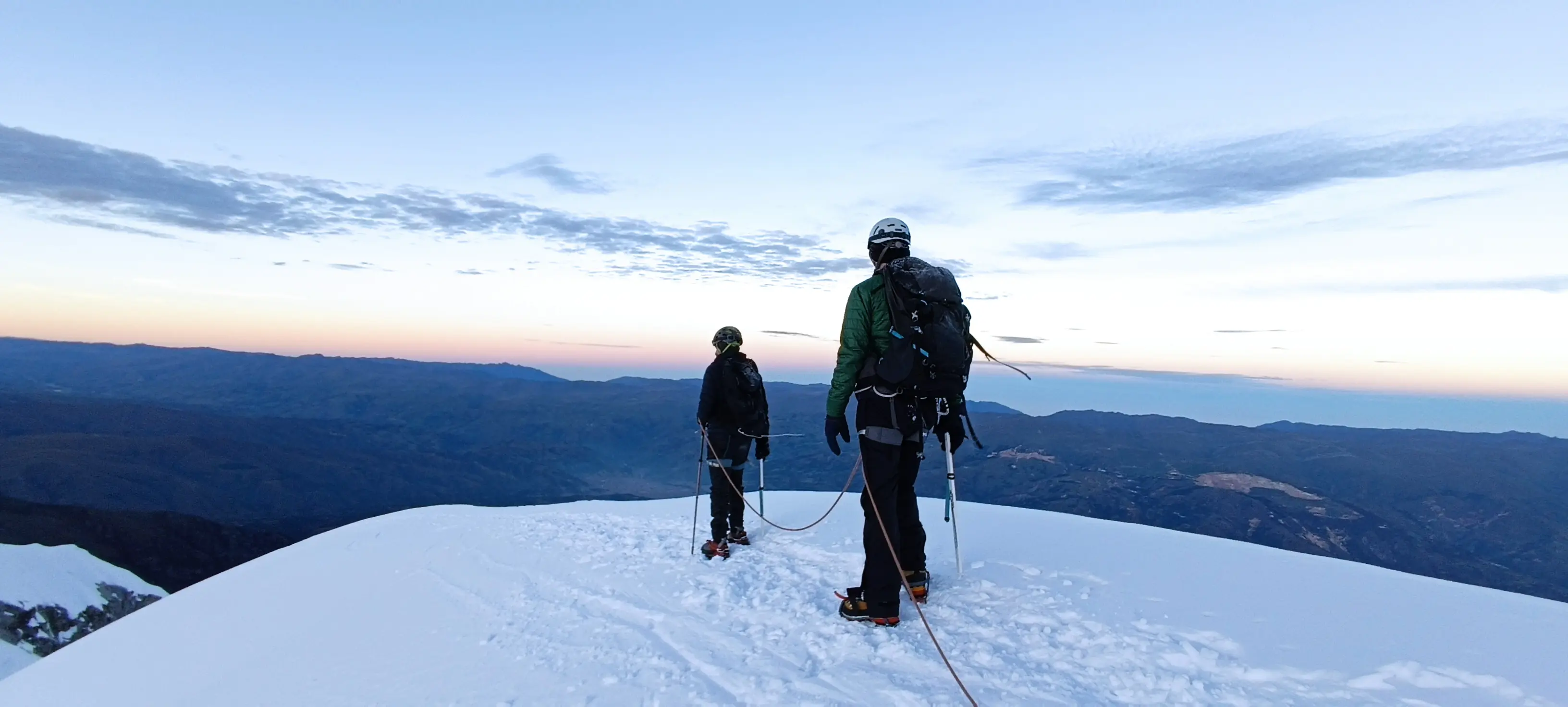
Summit day: as usual, we leave early, around 2:00 a.m. The first part of the route is a walk across rocky terrain until we reach the glacier. Once on the glacier, we put on our climbing gear, including crampons and harnesses. At the beginning, we usually encounter hard ice; later, the conditions improve and we walk on good snow, overcoming several steep slopes and negotiating multiple crevasses until reaching the high plateau glacier (the collado), located between the north and south peak. From there, we climb along the south slope as we approach the summit. The summit offers incredible views in every direction. After a short break for photos and to enjoy the splendid scenery, we descend via the same route, until Moraine Camp and then to Base Camp, where the trail ends. Our climb concludes here, Where the transport will be waiting for us to return to Huaraz. Once back in Huaraz, we can enjoy a nice shower at the hotel and some rest, followed by a good dinner in town to celebrate a successful climb. Snack while climbing.
The Itinerary above is just and suggested program. We are flexible you are completely free to build your own program, according to your necessity and preferences
Services of the itinerary
What is included in the cost?
- Pre-departure briefing: one of our team members will come to the hotel to provide detailed information about the climbs of Vallunaraju. During this meeting, any questions or special requests regarding the climb can be addressed. The briefing will take place strictly at the scheduled time, 24 hours before the trip begins.
- Private transportation for Climbing Vallunaraju/ Round- trip private transportation between (Huaraz – Llaca Valley/ Llaca Valley – Huaraz)
- Hotel Pick-up and Drop-off: We provide pick-up and drop-off at your hotel according to the trip program. Pick-ups and drop-offs are included only for hotels located in the downtown area. For hotels outside the downtown area, additional charges may apply depending on the location
- An experienced international bilingual mountain guide, certified by AGMP, UIAGM, and IFGMA, will accompany you on climbing Vallunaraju. Your guide will ensure your safety, comfort, and peace of mind, allowing you to fully enjoy the climb without worry.
- A dedicated mountain cook will accompany you on the,Vallunaraju climbs. Specializing in high-altitude cooking, the chef will prepare all meals along the trek & climb program, ensuring you are well-nourished and energized throughout your expedition. You’ll never go hungry!
- Four Healthy Meals per Day: Enjoy hearty breakfasts, snacks, cooked lunches, tea times, and hot dinners throughout your expedition. Vegetarian dishes or special menus are available at no extra cost. Please indicate any allergies or dietary restrictions on your reservation form and remind your guide during the pre-departure briefing. You’ll be well-fed with breakfast, lunch, dinner, snacks, and hot drinks to keep your energy up for the climbs.
- Daily Trail Snacks: Each morning at the camping spot, you will receive a selection of local fresh fruits, biscuits, chocolate, caramels, and more, packed in a reusable cloth bag. Your snack bag will be refilled every morning, so you can enjoy nourishing snacks throughout your day.
- Cloth Snack Bag: Each participant will receive one reusable cloth snack bag to carry daily snacks. This eco-friendly bag helps reduce plastic waste and protect the environment while you enjoy your Expedition.
- Daily Tea Time: Every afternoon, after arriving at the campsite and before dinner, the cooks will serve a light appetizer, including options like popcorn, biscuits, coffee, hot chocolate, tea, hot water, guacamole, and fried roots. After a long day of hiking, or climbing, you can relax, warm up, and enjoy a snack without waiting for dinner.
- Donkey (mules) + donkey driver service not available for Climbing Vallunaraju
- Mountain Porters: they will assist you on the Vallunaraju climbs, transporting shared climbing equipment between (Base Camp → Morena Camp → Base Camp).
- Group Medical Kit and Safety: Our crew will carry a complete first-aid kit, and all climbing guides are trained in first aid. Your guide will always have a personal first-aid kit and oxygen to handle basic emergencies such as altitude sickness, traveler’s diarrhea, cuts, or scrapes. If necessary, we will evacuate you promptly from the expedition and ensure you receive proper treatment at a clinic or the hospital.
- Camping Equipment for Climbing Vallunaraju: For the Vallunaraju climb, only sleeping tents are provided. Other camping equipment, such as dining or cooking tents, is not available on this climb
- Accommodation: Enjoy 01 night in shared sleeping tents throughout the Expedition. A single supplement tent is available upon request for an additional cost.
- Sleeping Tent: Each sleeping tent is high-quality, comfortable, and multi-season, designed for two people with ample space for a restful night after a long day of expedition.
- One foamy sleeping pad per person
- Group Climbing Gear: All essential group climbing equipment and protective hardware are provided, including ropes, snow pickets, ice screws, stoves, and all other supplies necessary to ensure a safe and well-supported attempt at the summit.
- Full Utensil kitchen for everybody
- Radio communicator and cell phone in places of coverage: our main priority will always be the safety of our clients and our team. While we are prepared and all our guides are trained for most of the problems that clients have on the mountain. Call by cell phone in a place where there is coverage in any case of an emergency or an incident, or get in touch with the office, which is in the town, making use of the radio communicator, this will help everyone feel safe that they are safe.
- We will create a lifetime experience for you.
What doesn't included
- Transfer in lima (lima airport – lima hotel – airport (arrival & departure day)
- Booking Ho(s)tel for accommodation in lima
- Transfer in lima (lima hotel – bus station to Huaraz – lima hotel (arrival & departure day)
- Booking Bus or flight ticket to transfer from (Lima – Huaraz – Lima)
- Transfers in Huaraz (transfer from Huaraz airport or bus station – Huaraz hotel – Huaraz bus station or airport (arrival & departure day)
- Acclimatization program around Huaraz (laguna wilcacocha + laguna churup or similar hike)
- Entrance fee ticket or trekking permits (60 soles per participant) valid for 02 days
- Meal and beverages during the stay in Huaraz (breakfast – lunch & dinner)
- Extra food on our trip
- Personal Climbing equipment for the ascents of Vallunaraju
- Additional tours.
- Sleeping-bag (from – 15 ºC to – 20º C)
- Travel insurance assistance
- In case of sickness while on the Climb, emergency costs for transportation, etc. are not included.
- Phone calls, access to internet cabins & other extra expenses
- Laundry service
- Personal toilets.
- Personal medicines.
- Tips for the staff
What to bring
- Approaching or hiking shoes: A good pair of hiking shoes is the most important piece of gear for your trek expedition. Poorly fitting shoes can lead to lost toenails, painful blisters, and sore feet. Choose footwear that fits well and is already broken in. As a guideline, B0 or B1-rated shoes are advisable. There are many reliable brands on the market, including Millet, Salewa, La Sportiva, The North Face, Simond, Lowa, and others.
- Climbing boots: for most non-technical 5000–6000 m peaks, a B2-rated mountaineering boot is the sweet spot: stiff enough for semi-automatic crampons (C2), warm enough for glacier travel and alpine starts, but still comfortable for long approaches. B2 boots typically have a rear heel welt for hybrid crampons. “Double boots” become more useful when temperatures drop well below freezing, you expect multiday snow camping, or you climb in consistently wet conditions. For peaks around the Cordillera Blanca in Peru, many climbers use insulated B2 or lighter double boots successfully. The G2 Evo is one of the best modern options if you want warmth without the bulk of expedition boots. It climbs well, walks surprisingly comfortably, and is ideal for cold alpine routes and technical glacier travel. Best lightweight B2 option: La Sportiva Aequilibrium ST GTX, Scarpa Nepal Evo GTX, Scarpa Ribelle Lite HD, scarpa Fanton 6,000,
- Socks: We recommend bringing two pairs of socks for your approach shoes. Many people also prefer wearing a thin liner sock underneath, as it can help reduce friction, prevent blisters, and improve overall comfort.
- Underwear
- Quick-drying base layers: A synthetic base layer is recommended over cotton or wool for better moisture management. Long sleeves are preferable for added protection and warmth.
- Lightweight cotton or synthetic pants: Cotton or synthetic hiking pants are suitable for trekking and provide comfort and flexibility & moving around camp.
- Mid-layer: A medium-weight fleece or synthetic insulated jacket for warmth and layering (such as: PrimaLoft, Polar Tec, or merino wool).
- Down or micro-down jacket: Suitable for cold conditions and high-altitude temperatures providing essential warmth in cold conditions (optional but highly recommended).
- Lightweight waterproof shell jackets (e.g., Gore-Tex): are highly recommended for protection in cooler conditions. Reliable brands include Patagonia, Mammut, Eider, Millet, Marmot, Symonds, and others.
- Waterproof over-trousers (e.g., Gore-Tex): pants with side zippers are highly recommended. It’s also worthwhile to have lightweight synthetic climbing pants with a durable finish. Slightly stretchy fabrics like Schoeller are ideal for comfort and mobility. Reliable brands include Patagonia, Mammut, Eider, Millet, Marmot, Symonds, and others.
- Sun hat: A wide-brim hat or a baseball cap with a bandanna safety-pinned to it helps protect your face and neck from the sun.
- Warm wool or synthetic hat: A lightweight, packable hat made from wool or synthetic materials is essential. It should be easy to fold and store in your backpack when not in use.
- Balaclava or Neck gaiter: A medium-weight wool or synthetic neck gaiter is highly versatile. It provides protection from the cold and wind and can also be used as an ear warmer or face covering when needed.
- Sun glasses: Essential for high-altitude trekking around Huaraz, where UV intensity is strong and glare from snow is significant. Choose any brand you prefer, but ensure they provide high UV protection. Category 4 lenses are recommended for trekking.
- Gloves: For climbs of any summits in Cordillera Blanca, you want gloves that balance warmth, waterproofing, dexterity, and durability with ice axes/ropes. A very common setup is:
• A pair lighter softshell glove for the approach and warmer sections
• A pair insulated Gore-Tex shell glove for summit day and cold mornings
• Optional thin liner gloves for camp or layering
For your use case, insulated Gore-Tex alpine gloves are the best choice — warm enough for pre-dawn glacier starts, but still dexterous enough for clipping, jumaring, and axe handling. - Gaiters: Gaiters are required for most climbs in the Cordillera Blanca to protect your boots and feet from fresh snow, moisture, and debris.
- Climbing Helmet: A climbing helmet is recommended for all peak ascents to ensure your safety.
- Harness: A harness with adjustable leg loops is recommended, large enough to fit comfortably over all layers of clothing. Be sure it includes a belay loop.
- Regular Ice Axe: A standard mountaineering ice axe is suitable for climbs such as Pisco, Urus, Ishinca, and Vallunaraju, among others.
- Crampons with Anti-Balling Plates: These rubber or plastic plates attach beneath crampons to prevent snow from building up in soft conditions. Alpine crampons are recommended.
- Carabiners: If you are climbing with a guide service, three locking carabiners and two non-locking carabiners are generally sufficient. Climbers without a guide may require additional technical gear and equipment.
- Sunglasses: High-quality sunglasses with strong UV protection are essential due to the intense sun exposure and snow glare in Huaraz and the Peruvian Andes. Category 4 lenses are recommended for alpine climbing.
- Sleeping Bag: For high camps on climbs up to approximately 5,200 meters, a sleeping bag rated to around -15°C is recommended. For climbs above 6,000 meters, a bag rated between -20°C and -25°C is advised. Higher camps may require even warmer insulation.
- Sleeping Pad: A foam sleeping pad or insulated air mattress, such as a Therm-a-Rest ProLite or NeoAir, is recommended for greater comfort and insulation at high camps.
- Water Bottles: Two / 1-liter wide-mouth water bottles are recommended, such as those from Nalgene.
- Hydration systems (Camel Bak-style reservoirs): are not recommended, as the hose may freeze during climbing days.
- Water Treatment: Chlorine dioxide tablets or other purification systems, such as Micropur, are optional but useful for treating drinking water.
- Headlamp: A headlamp with extra batteries is essential. LED models from Petzl or Black Diamond are highly recommended.
- Sunscreen: A high-quality sunscreen is important for protection against strong UV exposure at altitude.
- Lip Balm: Lip balm with UV protection is recommended to prevent dryness and sun damage.
- Insect Repellent: Optional, but useful in lower valleys and campsites.
- Pocket Knife: Optional for general camp use and small repairs.
- Pee Bottles: Two 1-liter wide-mouth bottles, such as those from Nalgene, are optional but convenient for use during cold nights at high camp.
- Thermos: An optional 1-liter stainless steel vacuum thermos is useful for keeping drinks warm during summit days and cold evenings.
- Trekking poles: Hiking or trekking poles are very useful, ideally in a compact three-section design. Good poles help reduce impact on your knees and joints. We recommend lightweight, adjustable models, as they are easy to store and versatile. Brands such as Black Diamond and Leki are excellent choices.
- Duffel bag / rucksack: A durable duffel bag (around 60 liters) with a padlock is required. These bags will be carried by burros to the Camping spots, so they must be strong and abrasion-resistant.
- Daypack: A 40–45 liters backpack is needed to carry spare clothing, snacks, a camera, and water during day hikes or climbing days.
- Personal first aid kit: We recommend carrying a small, well-prepared personal first aid kit including sterile dressings, antiseptic cream, gauze, bandages, rehydration sachets, zinc oxide tape, and anti-inflammatory pain relievers such as ibuprofen or aspirin. It is also advisable to bring paracetamol and acetazolamide (Diamox) for the prevention and treatment of mild acute mountain sickness (AMS) symptoms. For digestive issues, include loperamide for diarrhea, and antibiotics such as ciprofloxacin or Bactrim for bacterial stomach infections (only if prescribed by your doctor). Additionally, we suggest carrying a small roll of adhesive tape and cough drops for basic relief during the trek.
- Personal Toiletries: Bring basic toiletries such as a toothbrush, a small tube of toothpaste, dental floss, and contact lens solution (if needed). Include a small bar of soap and a compact hand towel or washcloth. On most expeditions, warm washing water can be provided at Base Camp in the morning and afternoon. A small synthetic hand towel or washcloth is useful for sponge baths. Also bring toilet paper for personal use.
Extra service available upon Request
Optional: If you wish, we can arrange & include in the program budget:
- hotel accommodations in Lima (please let us know your preferred hotel)
- Bus or flight ticket booking to travel (Lima – Huaraz – Lima) either by bus with Cruz del Sur or by flight with LATAM Airlines. Just let us know your preferences
- Hotel accommodation booking in Huaraz
Prices & Booking
Season:
End of May – Begin of SeptemberWe organize this combined program of climbing Vallunarajuon a private basis for in small groups. This expedition is suitable for individual travelers, groups of friends, families, adventure companies, and tour leaderswho wish to experience high-altitude climbing in the Cordillera Blanca with professional local support. All trips are operated with fully qualified local mountain guides, ensuring safety, quality logistics, and authentic Andean Mountain experiences. Please feel free to contact us to discuss the itinerary and your preferred travel dates. We will be happy to prepare a personalized quotation, with no obligation.
Cost on private service with version of camping support:
Loooking for a personalized experience?
We can tailor the itinerary and services to your specific needs. Contact us for a custom quote and dedicated logistics planning.
Add-Ons & Extras Not Included in the Budget
Enhance your climbing expedition with the following optional services and upgrades. These can be arranged and added to your program upon request.
Booking & payment policy:
To confirm your reservation about your Huayhuash trek, a deposit of 25% of the total program price is required at the time of booking. The remaining balance must be paid in cash upon arrival in Huaraz, no later than 48 hours before the expedition begins. We offer a flexible cancellation policy. If your plans change, please contact us as early as possible so we can discuss available options and rescheduling possibilities.
Payment Methods:
Cash in Huaraz
RecomendedNot additional fees.
Bank transfer
Accepted, a USD $60 bank fee applies.
Credit/Debit card
Accepted; a 6% processing fee applies.
Western union
Transactions incur a commission of 3% to 5%.
A 5% discount is offered for reservations made 5 months in advance of the expedition start date. The discount is applied to the total program price.
Students & groups of 6+ — Eligible for special group discounts.
Private service:
We offer 100% guaranteed private multi-day treks for any group size. Enjoy a comfortable, highly personalized experience with flexible itineraries tailored for your safety, acclimatization, and overall enjoyment. All departures are 100% guaranteed, once the reservation has been confirmed
The Premium Difference:
From the very beginning, ANDES ADVENTURE HOLOIDAYS E.I.R.L, has focused on delivering premium, personalized trekking experiences — rather than low-cost, high-volume tours.
Professional Operations
Careful logistics and responsible operations designed for high standards of service and uncompromised safety.
Premium Gear & Transport
Top-quality camping and safety equipment, along with reliable modern private transportation.
Small Group Sizes
Maximum 8 participants to guarantee a personalized, comfortable, and highly attentive experience.
Expert Local Staff
Highly experienced bilingual mountain guides, mountain cooks, and dedicated local staff.
Our pricing reflects the true cost of operating professionally and responsibly, ensuring a high standard of service, safety, comfort, and authentic life time experiences.
Adicional notes:
Acclimatization Hikes
Proper acclimatization to altitude is essential before undertaking any Climbing expeditions in the Cordillera Blanca or Cordillera Huayhuash, in order to avoid loss of energy or altitude-related illnesses. Climbing above 5,000 meters is physically demanding, even when the terrain is not steep or highly technical. For any peak-climbing expedition in the Cordillera Blanca, we strongly recommend a minimum of 2–3 days of acclimatization before the ascent.
Acclimatization for Climbing
All climbing Expeditions programs in the Cordillera Blanca are physically demanding, as you will spend most of the time at elevations between 4,000 and 5,000 meters, with rapid altitude gain shortly after departing from Huaraz. Proper acclimatization is essential to reduce the risk of altitude-related illness.
Our expeditions are carefully designed with a gradual acclimatization program to help your body adjust safely to the altitude. We recommend following the itinerary as planned. If you have extra time, arriving earlier is highly advisable so you can spend at least one full day resting and recovering from your journey before the expedition begins.
Some Considerations
- The Peruvian general sales tax (I.G.V) 18% is not included in the rate shown.
- The cost shown does not include the cost of the pre-payment transaction for early booking.
- How to book this climbing expedition program, you can make a reservation by sending us an email or using the reservation form provided on our website or via WhatsApp.
- Booking Confirmation: To confirm your booking with us, you must make a deposit of 25% of the total price. The remaining balance must be paid in cash upon arrival in Huaraz, strictly 48 hours before the tour begins.
- Once you have made the deposit, please send the payment voucher via email or WhatsApp. If you booked online, kindly message us on WhatsApp so we can stay in contact, coordinate your briefing, and provide useful recommendations for your trek program.
- Fast and Easy Communication: All emails are answered as soon as possible to ensure fast and easy communication.
- Communication Options: We offer several ways to stay in touch with us. You can contact us through online chat, WhatsApp, Instagram, or via the email on our website. Simply fill out the reservation form or send us an email to ensure easy and personalized communication with our team.
- For more information, please contact us via WhatsApp at +51 931 888 334 or by email at in@andesadventureholidays.com.
Guiding Ratio on Climbing Mount Vallunaraju
Climbing Vallunaraju : For non-technical or moderately difficult (PD) summits, we use a 3:1 client-to-guide ratio, meaning a maximum of three clients per guide. Due to the technical nature of the route, larger groups (more than three clients) will be accompanied by additional guides as required. We believe that maintaining a lower client-to-guide ratio significantly increases overall safety during the climb.
Grading Summit
Vallunaraju = 5,686 m / PD
Grade = PD mostly glacier travel, suitable for first time climbers, but physically demanding
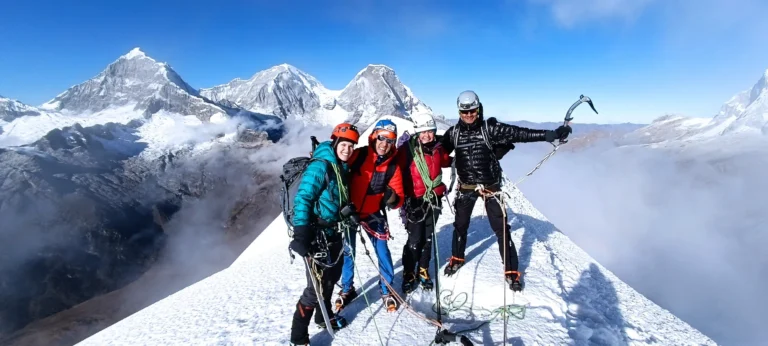
Vallunaraju (5,686 m) is graded (PD) and involves moderate snow climbing, making it suitable for beginners who want to gain experience in high-altitude mountaineering. However, despite the moderate technical level, the climb is physically demanding due to the altitude. It is considered one of the most important training mountains in the Cordillera Blanca, combining a relatively accessible approach with an excellent snow-covered glacier, that is ideal for practicing, climbing course. From the summit, climbers are rewarded with spectacular views of the Huascarán massif and many of the most beautiful and aesthetic peaks of the Cordillera Blanca.
Climbing Routes
Vallunaraju – Normal Route: West Slope & Southwest Ridge
Vallunaraju is a relatively easy peak, suitable for beginners. However, it is important to complete a proper acclimatization process before attempting the summit and to be in good physical condition. This route is straightforward and accessible for those who are fit and well-acclimatized, using a standard ice axe for climbing. It offers an excellent opportunity to practice basic mountaineering techniques in a stunning high-altitude environment.
Important Note: Conditions on all peaks in the Cordillera Blanca change frequently, from year to year, even from month to month. The route descriptions we provide are based on the most recent season, and should be considered referential only. Mountain conditions can vary significantly due to weather, glacier retreat, and other natural factors. Because of rapid glacier changes and global warming, route descriptions in guidebooks may become outdated within a year or more. Always rely on updated information from local guides before attempting any expedition.
Our Guiding Team
The guide who will accompany you is a bilingual professional, an expert in mountaineering with extensive experience, and holds international certifications including UIAGM, IFMGA, and AGMP.
Advices for Climbing Vallunaraju
Note: Please understand for Climbing Vallunaraju, from base camp – Morena Camp – base camp, for this summit, we will not have donkey and donkey driver support. Therefore, each participant must carry their own personal equipment from Base Camp to Moraine Camp. You will need to carry your daypack with your personal gear, including: climbing equipment, clothing, sleeping bag and sleeping pad (foam mattress or thermal mat), extra warm layers, waterproof jacket and pants, water bottle, camera, hiking poles, technical climbing gear should include: a pair of technical ice axes, harness, crampons, mountaineering boots, carabiners, ATC belay device, helmet, Prusik cords, and slings. Our porters will carry the group climbing equipment, including tents, food, cooking gear, and ropes, but each climber is responsible for carrying their own personal and technical equipment.
Tips for Climbing Vallunaraju
It is advisable to be in good physical condition before starting these ascents. You will enjoy the climbs much more if you are well prepared. We recommend running, cycling, going to the gym, or jogging for about 30 minutes a day at least three times per week for three months before your trip. Hiking uphill and downhill with a backpack weighing 10–15 kg is also highly recommended, ideally in variable weather conditions to strengthen your legs and improve endurance. Prior physical conditioning is important. Activities such as rock climbing, mountaineering practice, and glacier travel training are also very beneficial.
Remember that if you are well acclimatized and in good physical condition, you will truly enjoy the climbing experience.
The Porter Service
Porters will be responsible for carrying the group or collective climbing equipment, including sleeping tents, food supplies, kitchen utensils, ropes, and other necessary climbing equipment. Please note that the porters will carry both the collective expedition equipment and their own personal gear in large backpacks. The standard load for a porter is between 15 kg and 25 kg, including their personal equipment.
If you would like assistance carrying your personal climbing equipment, a personal porter service can be arranged upon request for an additional cost. Please note that this service is not included in the standard expedition quote.
Climbing Hours
The climbing times indicated are approximate and based on the average pace of our previous expedition groups. Individual climbing speeds may vary, with some climbers moving faster and others more slowly.
Approximation trek routes: Access roads to and from the trekking routes are generally unpaved dirt roads. In some sections the roads can be rough and bumpy, which means travel times may be slower than expected.
A Typical Climbing Day Routine
If you have climbed in the mountains before, you will find that the daily routine is quite similar. In our climbing programs, the day usually begins at 7:00 a.m. with breakfast. On summit days, however, the schedule is different. The start time depends on the specific mountain and route, but we typically begin the ascent around 1:00 a.m., although it may sometimes be earlier or later depending on conditions.
Best Time
- Begin of May – begin of September: Considered the best time, suitable for taking scenic pictures of landscape with blue sky. Besides are ideal months for adventure lovers, who want to practice mountaineering & other outdoor pursuits.
- October – November (intermediate season): Months in which sometimes after 2:00 pm you can have rain in the afternoon.
- December – March (rainy season): Mixed weather, sunny & cloudy, which means sometimes sunny during the day and rain in the afternoon. Take your precautions (wear rain clothes & poncho).
Weather
The weather in the mountains is highly variable. Even during the dry season (May–September), rain can occur due to the effects of global warming and climate change. Daytime temperatures can range from warm to very cold, and above 4,000 meters, conditions may include rain, strong winds, or snow. For detailed forecasts, you can check: Mountain-Forecast: https://www.mountain-forecast.com/